
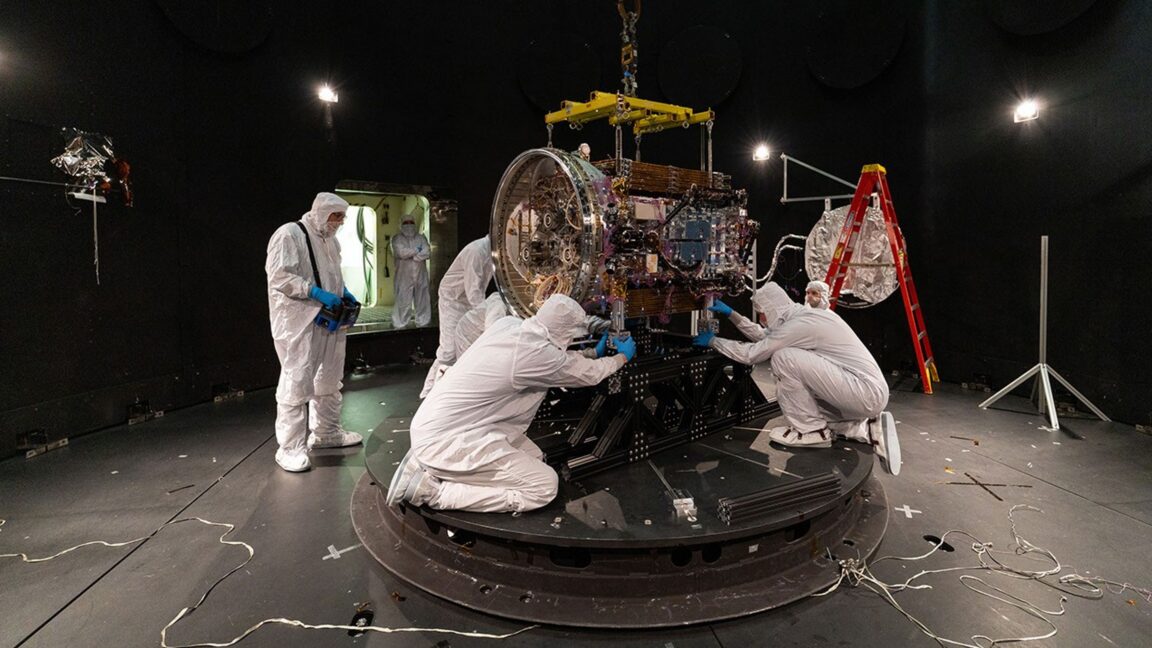
An attempt to save NASA's $500 million Neil Gehrels Swift Observatory from orbital decay fell short, though the behind-the-scenes effort to mount a rescue earned recognition from government and commercial space officials. The mission was developed by Katalyst Space Technologies under a $30 million contract awarded by NASA last September. Katalyst's rescue spacecraft, Link, successfully launched July 3 and completed initial checkouts before a malfunction caused it to spin out of control weeks later.
NASA announced in August that Link would not reach Swift as intended, aborting the rescue mission. Designing and building a satellite of Link's size and complexity usually takes several years, making the rapid timeline a remarkable achievement. Link weighed nearly a half-ton at launch, featuring electric thrusters, robotic arms, and large deployable solar arrays.
The Swift Observatory, launched in 2004, has far outlived its original design life and lacks its own propulsion system. Increased solar activity has accelerated atmospheric drag, hastening Swift's demise. Racing against the clock, NASA and Katalyst officials are reviewing lessons learned to better prepare for future rapid satellite rescue missions.
First and foremost: Don't wait until the last minute, said Shawn Domagal-Goldman, director of NASA's astrophysics division. NASA commissioned 30-day studies from three teams—Katalyst, Starfish Space, and a joint proposal from Cambrian Works and Astroscale—in August 2025 to show how they planned to rescue Swift from destruction. The teams eligible for the studies were limited to partners NASA already had on contract for technology development.
Source: Ars Technica · Summarized by HeadlinesBriefing