
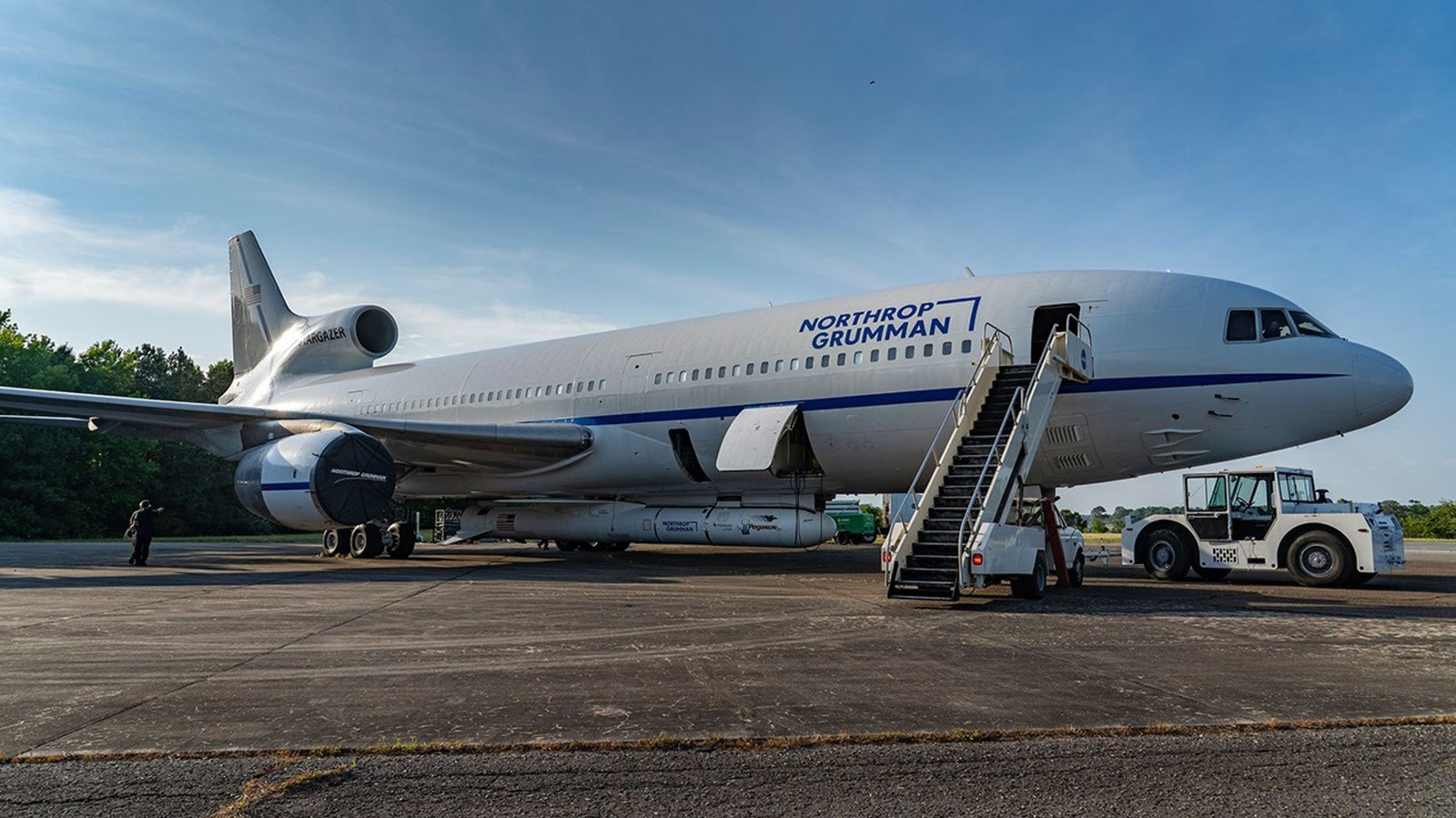
NASA's Swift Boost mission is set to launch on June 27 to halt the rapid orbital decay of the Neil Gehrels Swift Observatory. The telescope, which has been falling faster than expected due to increased solar activity, could lose its operational lifespan without intervention. The mission involves a robotic spacecraft called LINK, designed to dock with Swift and reposition it into a stable orbit. This effort underscores NASA's reliance on commercial partnerships, as LINK was built by Arizona-based Katalyst Space. The plan includes launching LINK via a Northrop Grumman Pegasus XL rocket carried by a Stargazer aircraft to Kwajalein Atoll. Engineers completed assembly in Virginia on June 9, with the rocket set to deploy LINK into space within 10 minutes after release.
The Swift Observatory, launched in 2004, has served as a critical tool for detecting gamma-ray bursts and recently identified a 13-billion-year-old supernova through data shared with the James Webb telescope. Its accelerated decay poses a risk to its role as a 'dispatcher' for cosmic events. NASA attributes the faster-than-anticipated drop in altitude to heightened atmospheric drag, a consequence of the sun's current activity levels. The agency emphasizes urgency, stating that Swift's orbit is 'decaying faster than most satellites,' necessitating immediate action. Katalyst Space's LINK spacecraft represents a novel approach, combining commercial technology with space rescue operations to extend Swift's functionality for years.
Without the Swift Boost mission, the telescope would likely cease operations within months. This intervention highlights the growing trend of using private-sector innovations to address space maintenance challenges. The success of LINK could set a precedent for future satellite salvage efforts, reducing costs and extending the lifespan of aging assets. Swift's scientific contributions, from tracking gamma-ray bursts to aiding supernova research, make its preservation a priority for both astronomy and broader space exploration. The mission's timing—just weeks before the planned launch—reflects the tight deadline imposed by Swift's declining orbit. NASA's proactive approach, leveraging partnerships like Katalyst, demonstrates adaptability in managing critical space infrastructure amid unpredictable environmental factors.
Source: Engadget · Summarized by HeadlinesBriefing