
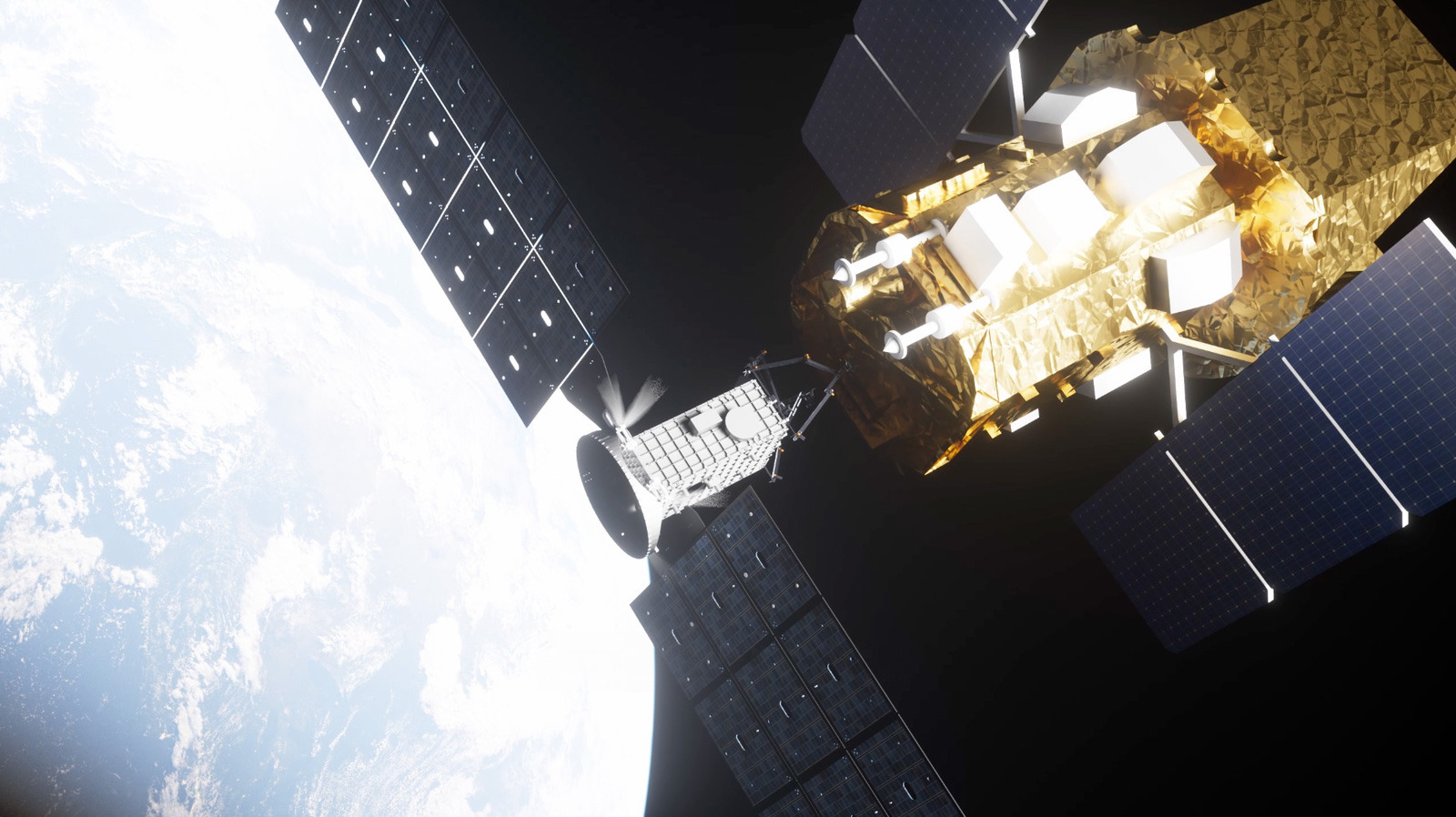
NASA launched the Swift Boost mission on July 3 from Kwajalein Atoll in the Marshall Islands, deploying a robotic spacecraft called LINK to rescue the Neil Gehrels Swift Observatory. The telescope has been falling faster than expected due to heightened solar activity and would re-enter Earth's atmosphere by year's end without intervention. LINK, built by Arizona-based Katalyst Space, reached orbit via a Northrop Grumman Pegasus XL rocket air-launched from the Stargazer carrier aircraft at 40,000 feet.
Ground teams have established contact with LINK and will spend several weeks verifying its propulsion, sensor, and navigation systems before the spacecraft begins its approach. Once cleared, LINK will survey Swift, capture it with three robotic arms, and tow the telescope to an orbit roughly 370 miles up — a maneuver expected to take 10 to 12 weeks and add approximately a decade to the mission's lifespan.
Since its 2004 launch, Swift has cataloged gamma-ray bursts — colossal explosions from collapsing and colliding stars that forge the universe's heaviest elements, including gold and platinum. Principal investigator Brad Cenko notes these bursts release more energy in seconds than the sun will in its entire lifetime. The observatory now serves as a cosmic first responder, rapidly pinpointing sudden events for follow-up study. This rescue preserves an irreplaceable scientific asset.
Source: Engadget · Summarized by HeadlinesBriefing