
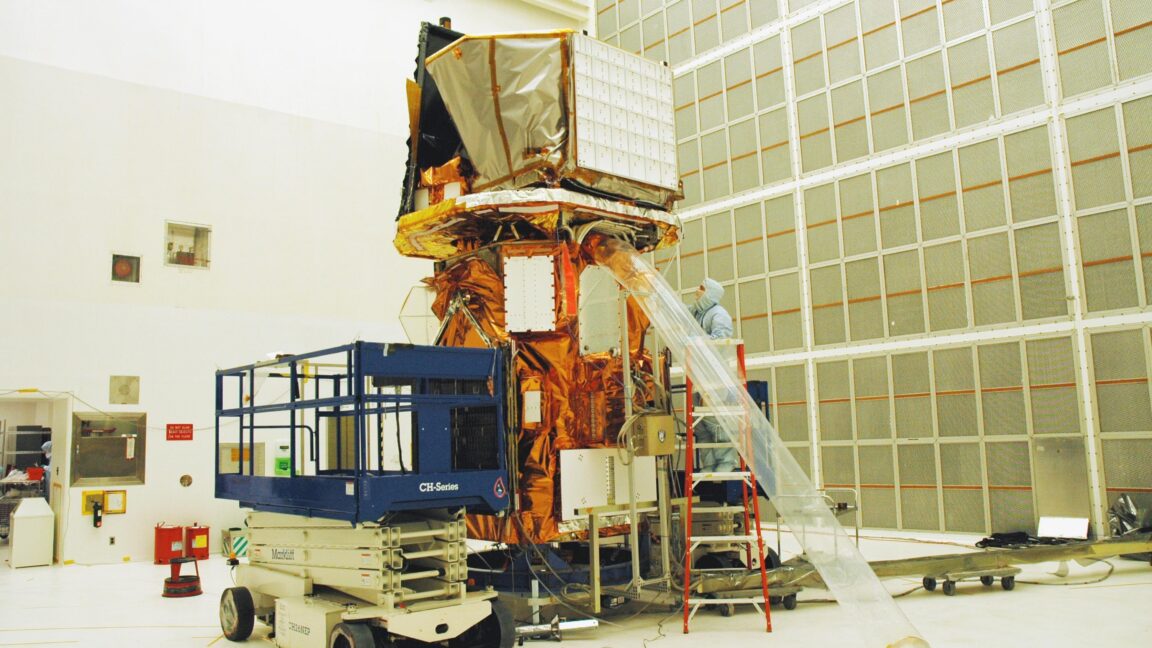
NASA's 21-year-old Swift satellite, a critical tool for detecting cosmic gamma-ray bursts, is plummeting toward Earth. With no backup in orbit, Katalyst Space Technologies is racing to launch a $30 million robotic rescue mission by June 1. The company’s Link spacecraft must dock with Swift, boost its altitude, and extend its scientific lifespan before atmospheric drag forces a fatal reentry by late 2024. This high-stakes operation marks NASA’s first major commercial satellite servicing contract, testing a model that could redefine orbital maintenance.
The Link mission faces immense challenges: Swift was never designed for capture, and docking in low-Earth orbit—where drag intensifies—requires precision. Katalyst’s team, working nights and weekends, has just nine months to build, test, and launch. Delays could mean losing Swift’s unique ability to pinpoint gamma-ray bursts, which fade within hours. The company’s CEO, Ghonhee Lee, called the timeline “technically ambitious,” citing rushed vendor negotiations and simultaneous design-testing processes.
NASA’s decision to partner with a commercial firm reflects a shift toward cost-effective, risk-tolerant space operations. Unlike the agency’s canceled $1.5 billion servicing project, Katalyst’s approach leverages existing tech to achieve “good enough” results quickly. If successful, this mission could pave the way for servicing military satellites and other aging assets. Skeptics question whether Link’s unproven docking tech can meet the deadline, but Katalyst’s engineers insist they’re “making great progress by those standards.”
Failure risks stranding Swift—a mission that has identified over 1,000 gamma-ray bursts since 2004. Its rapid repositioning capability remains unmatched, vital for coordinating follow-up observations by ground telescopes. As Swift’s orbit decays faster due to solar storms, the race against time underscores the urgency of satellite servicing innovations. Whether Link succeeds or fails, the experiment will shape NASA’s future strategy for sustaining critical space assets.
Source: Ars Technica · Summarized by HeadlinesBriefing