
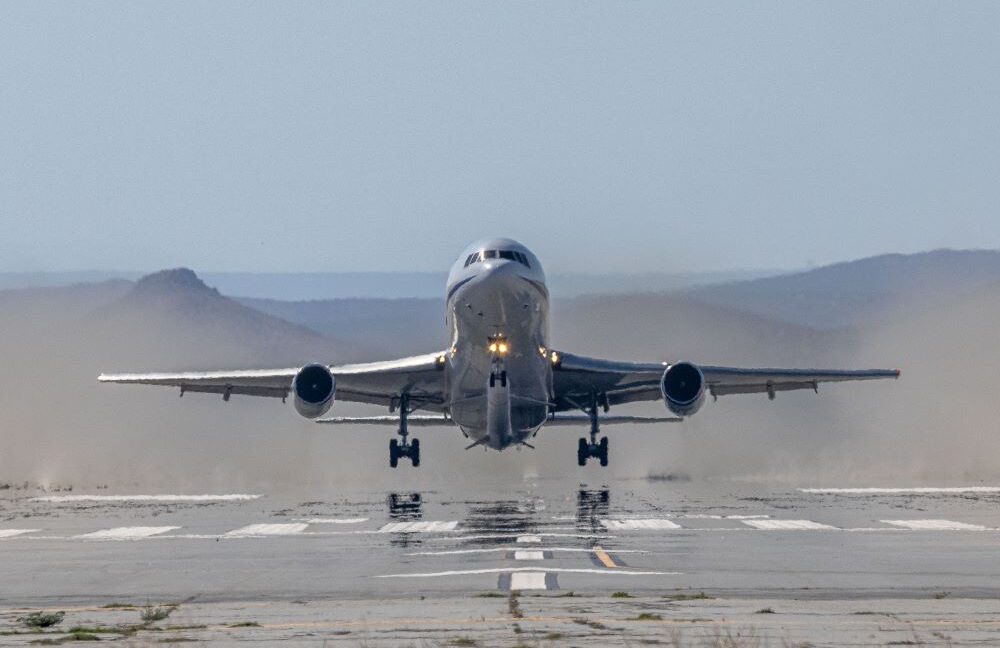
Northrop Grumman's Pegasus XL rocket air-launched from Kwajalein Atoll on Independence Day weekend, delivering Katalyst Space Technologies' Link satellite into a low-inclination orbit to begin a weeks-long pursuit of NASA's Swift gamma-ray observatory. The $500 million spacecraft, now 21 years old, orbits at 20.6 degrees inclination and will drop below 300 kilometers by October, making this rescue attempt time-critical. Katalyst built and launched the nearly half-ton Link in under nine months — a timeline that typically requires several years.
Link carries cameras, navigation sensors, three robotic arms, and three plasma thrusters designed to grapple the unprepared Swift and boost it to a safer altitude over several months. Since Swift lacks capture fixtures and its thermal insulation condition is unknown, ground controllers will cautiously survey capture points at tens of meters before attempting contact. The mission marks the first commercial robotic servicing of an unprepared satellite in orbit.
NASA awarded the contract last September after soliciting rapid-response proposals. Katalyst's success in reaching orbit validates a new model for dynamic space operations — refueling, repositioning, and repairing satellites never designed for servicing. The company argues operators should not be constrained by pre-launch design decisions, and this mission tests whether robotic servicing can replace astronaut-dependent missions like Hubble servicing.
Source: Ars Technica · Summarized by HeadlinesBriefing