
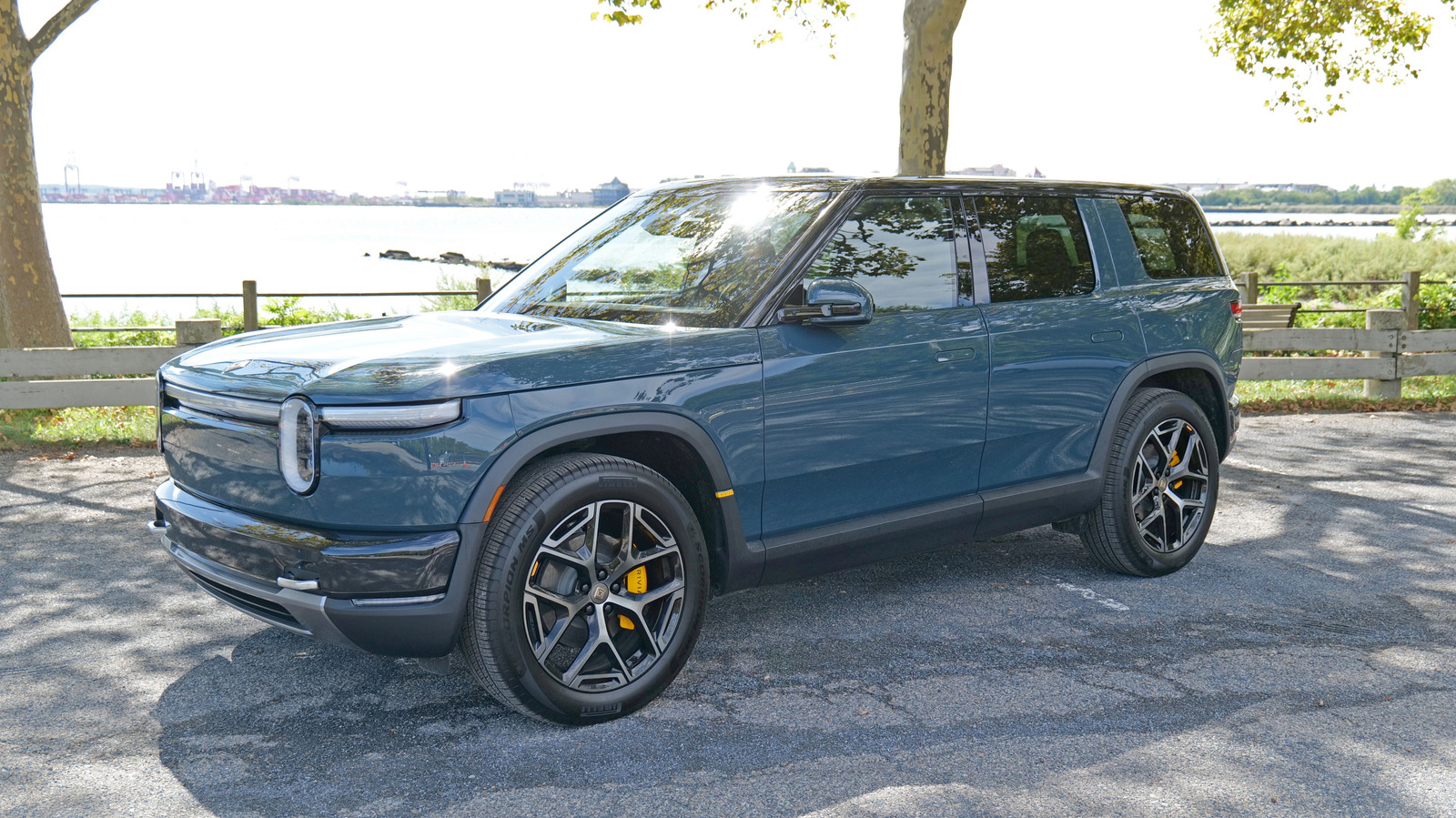
It’s not too big, it’s not too small and it’s not too expensive. It’s just right. Sam Rutherford for Engadget RATING : 9 / 10Pros Plenty of power and range Streamlined but practical interior Homegrown infotainment system Roomy for its class Universal hands-free driving on highways is great Cons Rivian Assistant not available just yet Hands-free driving on surface streets still needs work Base model won’t be out until next year Charging speed could be a touch faster Rivian's first vehicle — the R1T — initially hit the roads in 2021.
Despite the industry's best efforts, electric trucks just haven't enjoyed the same popularity as their gas-powered counterparts. Rivian followed that up with the R1S in 2022, which added more room for passengers while also serving as the primary platform for future development. But with three rows of seats and a starting price of over $80,000, it's a bit too big and too expensive to have true mainstream appeal.
Earlier this year, Rivian's third EV — the R2 — hit the roads. The company distilled nearly all of its best features and tech into a family-friendly mid-size SUV. It blends the ruggedness of an off-roader with the civility of a buttoned-up grocery runner for under $60,000 (or much less depending on the spec).
It's not too big, it's not too expensive and it has the right blend of tech and style, which sort of makes the Rivian R2 the closest thing to a Goldilocks EV SUV on sale today. Design Sam Rutherford for Engadget In many respects, the R2 looks like Rivian took the R1S's design, put it in a photocopier and then spit out a new vehicle at 75 percent size. But that's not quite right because Rivian chief design officer Jeff Hammoud previously said the R1 is actually based on an early concept for the R2.
The company liked it so much it ended up becoming the template for both models. Naturally, this means the R2 has a lot of the same design cues as its bigger sibling, including a boxy body with flush door handles, chunky bumpers and the company's signature pill-shaped headlights. It's a good look that balances the desire to have the brawny exterior you expect from a rugged SUV without straying too far into retro-inspired designs like you get from many of its gas-powered rivals — such as the current Bronco and Wrangler.
Rivian has also done a great job on integrating a lot of off-road features into the R2 chassis, like the built-in tow hooks in front and recessed mounts for a roof rack on top. The Performance Launch Model I tested also had Rivian's optional tow package, which includes a standard 7-pin connector and a concealed hitch. In the cargo area, there's both a 12v accessory socket and 120v outlet to power pretty much any gadget you would need.
If that's still not enough, the R2 even supports bi-directional charging (both V2L and V2H), though we're still waiting on Rivan to release the accompanying charging adapter. Sam Rutherford for Engadget Unlike some other EV SUVs that have ditched their frunks, the R2 still has a good-sized cargo area under its hood that offers 5.2 cubic feet of storage. Plus, there's a drain in case you want to use it as a cooler for tailgating or storing wet gear.
All together, you get a very capable car for all sorts of trips and conditions, but without the vehicle feeling like it needs to scream about its versatility. Some of the R2's best features are things like its Matrix LED headlights, which adjust automatically to driving conditions and oncoming vehicles. It feels like there's a little robot manning each beam to shine it exactly where you need it.
And while the R2 doesn't have a split tailgate like you get on the R1S, Rivian still included a rear hatch with a retractable window, so you can lower it to transport longer items or just catch some fresh air. There's even a button that lets you lower all four windows and the rear windshield with a single touch, which is a really nice features when the weather is just right. Sam Rutherford for Engadget I also appre...
Source: Engadget · Summarized by HeadlinesBriefing