
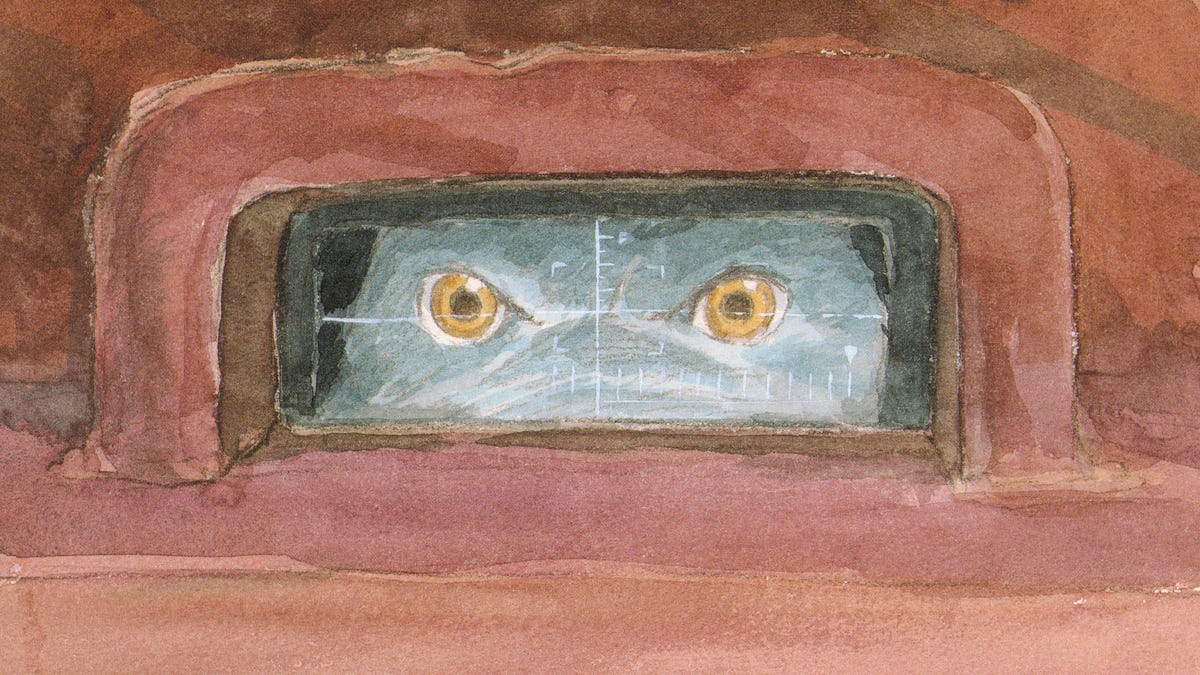
In 1980, Hayao Miyazaki turned 39 and felt creatively stuck. His debut feature, The Castle of Cagliostro (1979), had flopped at the box office, and he viewed it as a rehash of his past projects. "I don't think I added anything new," he admitted. He saw his creations as stuck in a familiar groove, and he worried that his approach was too simplistic.
Miyazaki had built a style around children's cartoons with big emotions, zany action, slapstick, and clear good guys and bad guys. He drew influences from The Shepherdess and the Chimney Sweep, the Soviet Snow Queen, and Fleischer works like Popeye. But he began to wonder whether defeating a villain was still enough for a happy ending. Heroism and villainy seemed murkier than they once were.
Searching for new possibilities, Miyazaki turned to alternative comics connected to the French magazine Métal Hurlant, including Arzach by Mœbius. He then discovered Rowlf (1971), an American comic by Richard Corben. Rowlf was far from Miyazaki's own work. Its violent, transgressive stories were close to the exploitation films of their era, and Miyazaki wrote that it "definitely is not for little children." Yet he sensed in it a world that seemed grotesque and ironic but was ultimately filled with faith in a healthy life, with the power of old fairy tales to encourage and give hope.
In 1980, Miyazaki proposed adapting Rowlf as his second feature film. That decision would change his career. The story followed Maryara, a princess kidnapped by mutants, and Rowlf, a werewolf-like figure who rampages to save her. Miyazaki found the damsel in distress "boring" as written and wanted her to be more active, a change that pointed toward the characters he would later create.
Source: Hacker News · Summarized by HeadlinesBriefing