
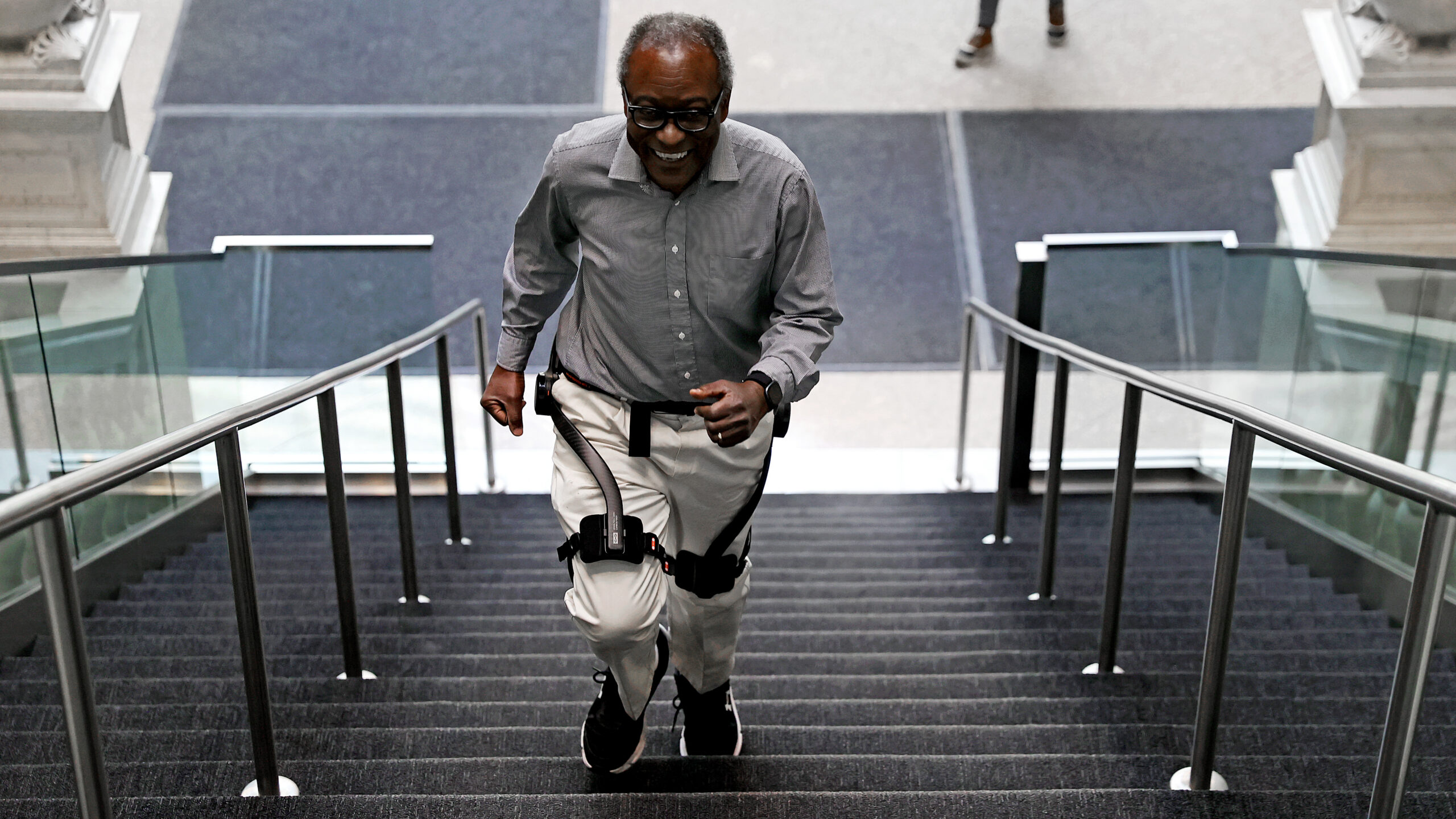
The concept of wearable exoskeletons dates back to 1890, when Nicholas Yagn, a self-taught Russian inventor, patented a wearable exercising apparatus. In 1919, American Leslie C. Kelley received a patent for a steam-powered walking support device, marking one of the earliest powered exoskeleton concepts. By the late 1960s, multiple actuated robotic exoskeletons with electronic control systems had been developed.
Exoskeletons work by generating forces that make wearers stronger, faster, or more enduring. Some enhance movement accuracy, dexterity, and posture, while others elevate human capabilities beyond normal limits or assist patients with reduced physical capacity. Modern active robotic exoskeletons typically feature lightweight mechanical frames with ergonomic attachments at the trunk, waist, and limbs.
For example, the Hypershell device used in Ukraine attaches to the waist and thighs to assist hip flexion and extension. The Suit X device used by IKEA supports the back and shoulders by attaching to the torso and upper limbs. Actuators in most powered exoskeletons convert battery power into mechanical movement, coordinated by embedded control units that adjust force and trajectory based on user state and task demands.
Source: Ars Technica · Summarized by HeadlinesBriefing