
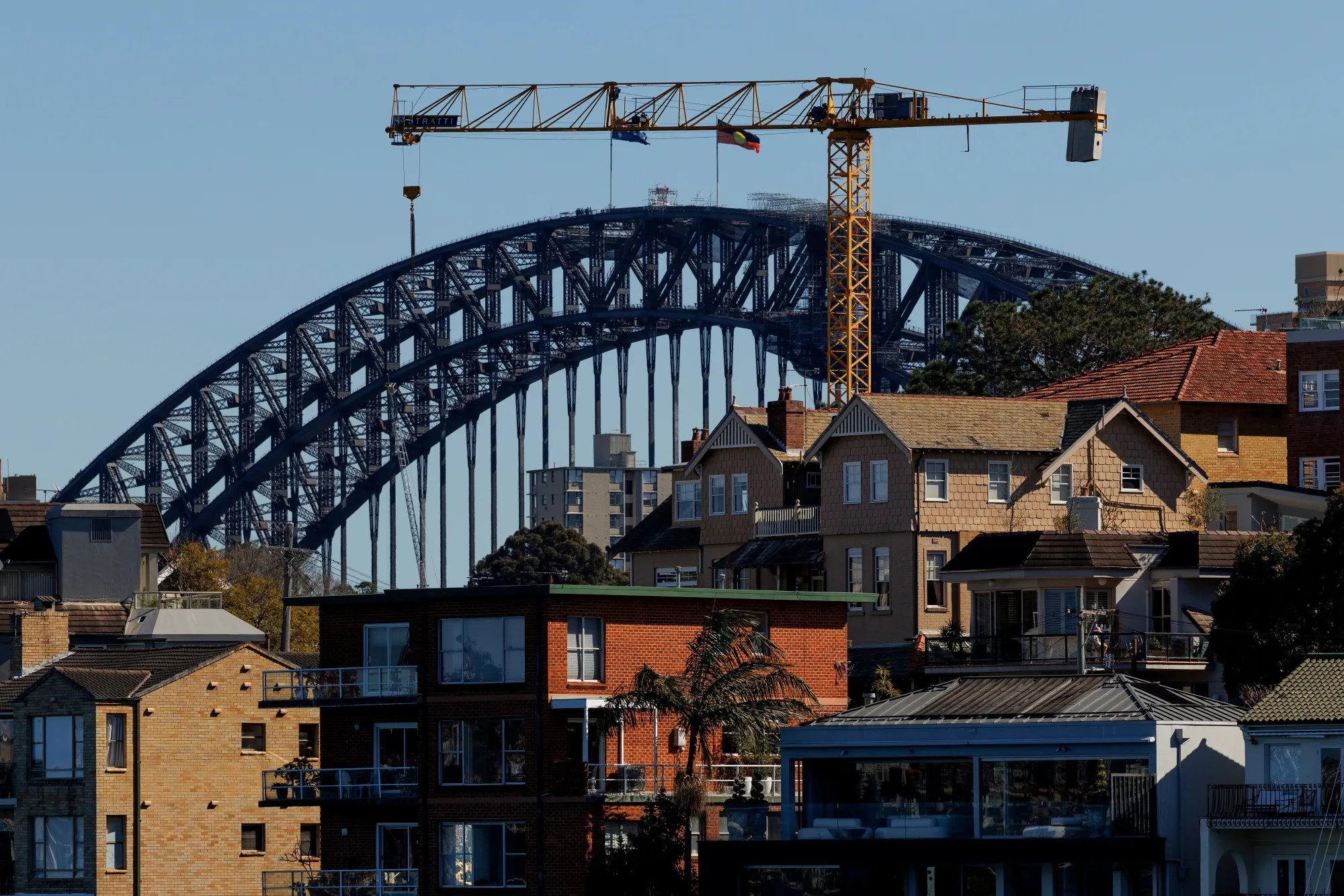
Australia’s property market is experiencing a significant downturn after years of rapid growth. National house prices have risen by roughly 70% over the past seven years, driven by ultra-low interest rates, post-pandemic immigration, and a housing supply shortage. However, the Reserve Bank of Australia began aggressively raising rates in February 2026, lifting the cash rate from 3.6% to 4.6% — the highest level since 2011. This has increased mortgage repayments and reduced buyer borrowing capacity, cooling demand.
Nationally, property prices have fallen for six consecutive months and are now 5.2% below their March 2026 peak. Sydney values are down 8.6% from their February peak, while Melbourne is down 7.2% since November. Prices are falling in seven of the eight capital cities, with Darwin the only exception. Top-quartile properties in Sydney and Melbourne have fallen more than 10% from peak levels.
The downturn is amplified by high household debt — equivalent to about 178% of annual disposable income — and the prevalence of variable-rate mortgages. Government changes to housing tax settings, including restrictions on negative gearing and adjustments to the capital gains tax discount, are also deterring investors. Over 2.2 million individuals owned investment properties in 2022–23, with nearly half negatively geared. Investor lending dropped 8.6% between March and June 2026.
Economists forecast continued declines: Westpac’s Matthew Hassan expects a 7.3% peak-to-trough fall, Commonwealth Bank’s Trent Saunders forecasts 9%, and HSBC’s Paul Bloxham predicts a 13% national decline and 17% drop in Sydney. Despite the severity, these declines are not unprecedented in Australian history.
Source: Bloomberg Markets · Summarized by HeadlinesBriefing