
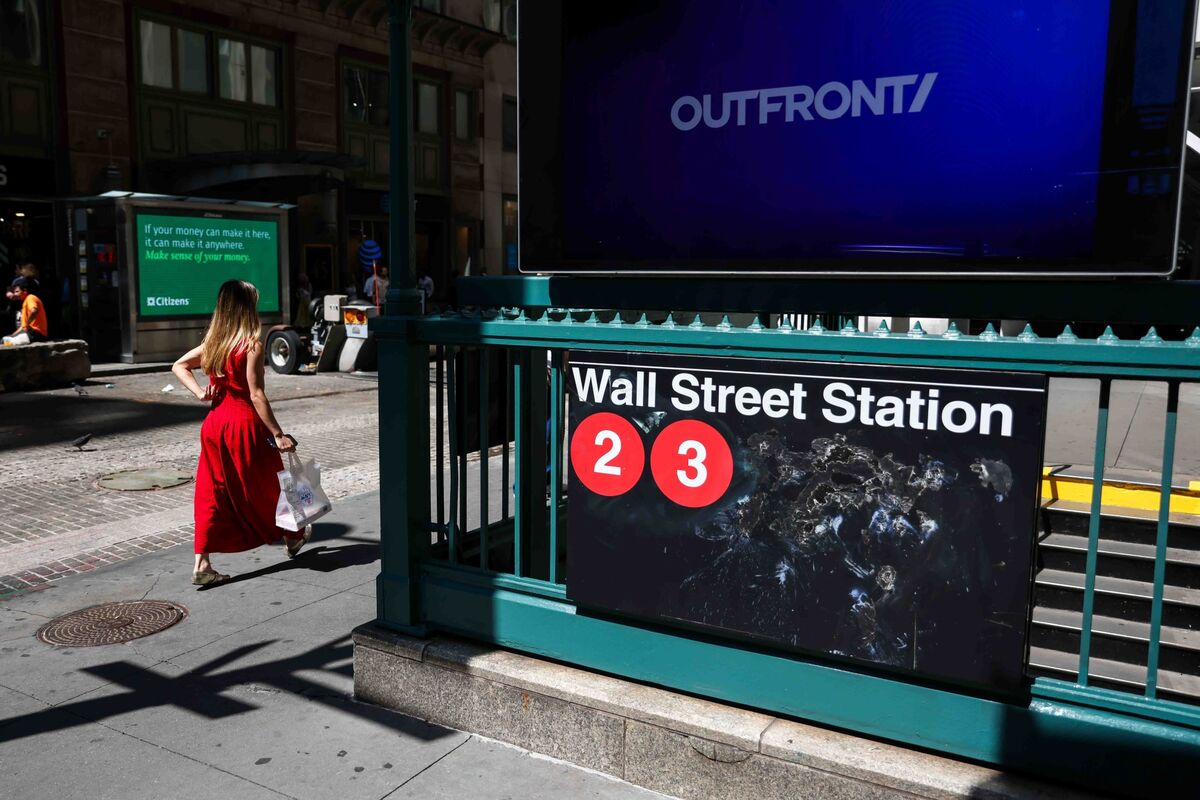
The AI-fueled resilience of the world's most-watched stock indexes is masking a widening retreat across financial markets, as elevated oil prices and borrowing costs take their toll. Yields on 10-year US Treasuries approached 5.4% this week, their highest since 2002, as Brent crude hovered above $100 a barrel, stoking fears of a prolonged inflation shock. The price of money is rising across much of the world, sending UK borrowing costs to a 19-year high and adding pressure on French government debt.
For all the turmoil, the big equity benchmarks have proved resilient. The S&P 500 hit a record on Tuesday, stumbled over the next two sessions amid fears over AI demand, then bounced back Friday as traders looked ahead to another bumper earnings season. But the breadth picture is far weaker. Barely a third of S&P 500 members are trading above their 50-day moving averages, and just 27% of Russell 2000 small-cap constituents clear that threshold. Bonds issued by the weakest borrowers yield about 15%, a punishing hurdle for companies that need to refinance.
The rate shock is spurring investors to reshuffle portfolios rather than triggering a wholesale flight from risk. The Russell 2000 notched its fifth straight weekly loss, down roughly 8.5% from its high and nearing correction territory, while real estate stocks endured an extended losing streak. New equity listings are also feeling the chill, with several high-profile delays that NYSE Group President Lynn Martin attributed to higher interest rates.
James St. Aubin, chief investment officer at Ocean Park Asset Management, warned that "the risk is that what began as an energy shock eventually becomes an earnings problem." A scenario combining a 6% yield on 10-year Treasuries with oil at $150 a barrel could send the S&P 500 down more than 20% next year, according to Societe Generale strategists. How much longer the big indexes can withstand the pressure may depend on what happens next in oil and bonds.
Source: Bloomberg Markets · Summarized by HeadlinesBriefing