
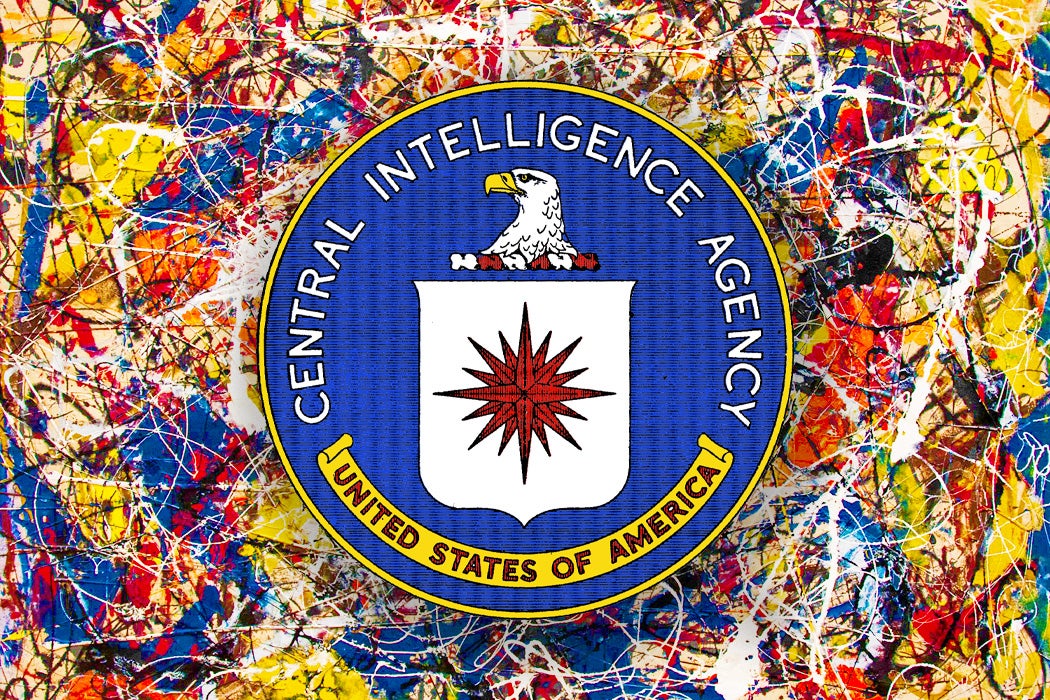
Modern art and design served as weapons in the Cold War, embodying liberalism against totalitarian oppression. Jackson Pollock’s gestural style countered Nazi and Soviet repression, positioning American creativity as a strategic asset. The Museum of Modern Art, founded by Abby Aldrich Rockefeller in 1929, became central to this effort.
During WWII, MoMA fulfilled 38 government contracts and mounted 19 exhibitions of American painting for the Coordinator of Inter-American Affairs, Nelson Rockefeller. After the war, Rockefeller's staff, including René d'Harnoncourt and Porter McCray, expanded the international exhibition program. John Hay Whitney succeeded Rockefeller, leading MoMA as a "Weapon of National Defense" and launching a "Traveling Art Caravan" to promote Pan-Americanism.
Even as Soviet propaganda labeled the U.S. culturally barren, American modern art projected global influence. The movement's alignment with diplomacy was so complete that Porter McCray left MoMA in 1951 for the Marshall Plan, and John Hay Whitney became Ambassador to Great Britain in 1957, with Nelson Rockefeller assuming the board chairmanship.
Source: Hacker News · Summarized by HeadlinesBriefing