
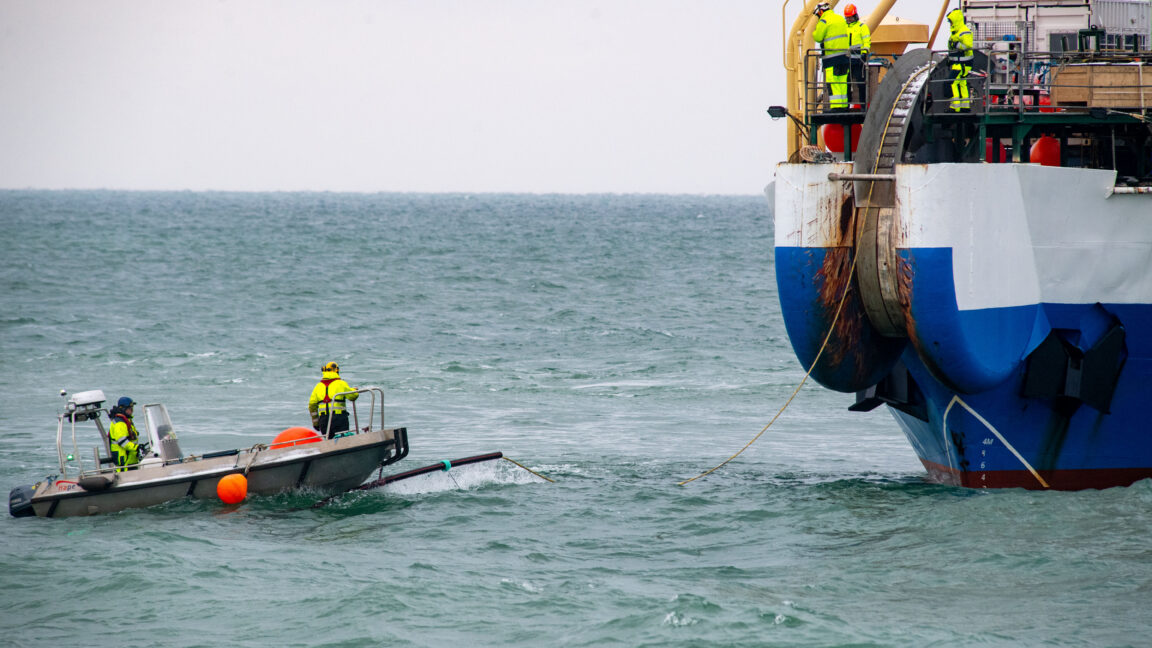
Despite the expansion of Starlink and other satellite services, most of the world's Internet traffic still travels through subsea cables crisscrossing the ocean floors. These fiber-optic lines coexist with oil and gas pipelines and submarine power cables, and all of these links now face growing sabotage risks as gray-zone warfare and open conflicts spread.
The threats are the subject of a new book, Undersea War, by Elisabeth Braw, a senior fellow at the Atlantic Council who leads the Threats to the Global Maritime Order Initiative. The book explores a rise in suspicious incidents in which ships dragging their anchors for unusually long periods have cut or damaged cables and pipelines, from the Baltic Sea to the Pacific Ocean. Braw acknowledges that about 60 percent of cable damage is primarily due to human error during fishing and shipping, when weighted nets or anchors drag across the seabed. Storms and undersea landslides account for a smaller share. Overall, 150 to 200 cables are damaged each year and usually repaired quickly.
Tensions between superpowers and open war in Europe and the Middle East have increased scrutiny of these incidents, and governments are sometimes prosecuting crews for alleged deliberate damage. One notorious case is the "Christmas Day massacre" of 2024, when the Russian-linked tanker Eagle S dragged its anchor about 56 miles, cutting four data cables and the Estlink 2 power cable linking the Baltic and Nordic grids. A month earlier, the Chinese cargo ship Yi Peng 3 had damaged two data cables in the Baltic. Its crew was not prosecuted by European authorities, while Finland has attempted to prosecute three senior officers of the Eagle S.
In Taiwan, the captain of the Chinese-owned ship Hong Tai was convicted of severing an undersea telecommunications cable and sentenced to three years in prison, and lawmakers later raised the maximum penalty to seven years. Other incidents this year include Iranian efforts to impose fees on cable operators in the Strait of Hormuz and a joint UK, Norway and US operation that confronted Russian submarines practicing ways to disable cables near Svalbard.
Source: Ars Technica · Summarized by HeadlinesBriefing