
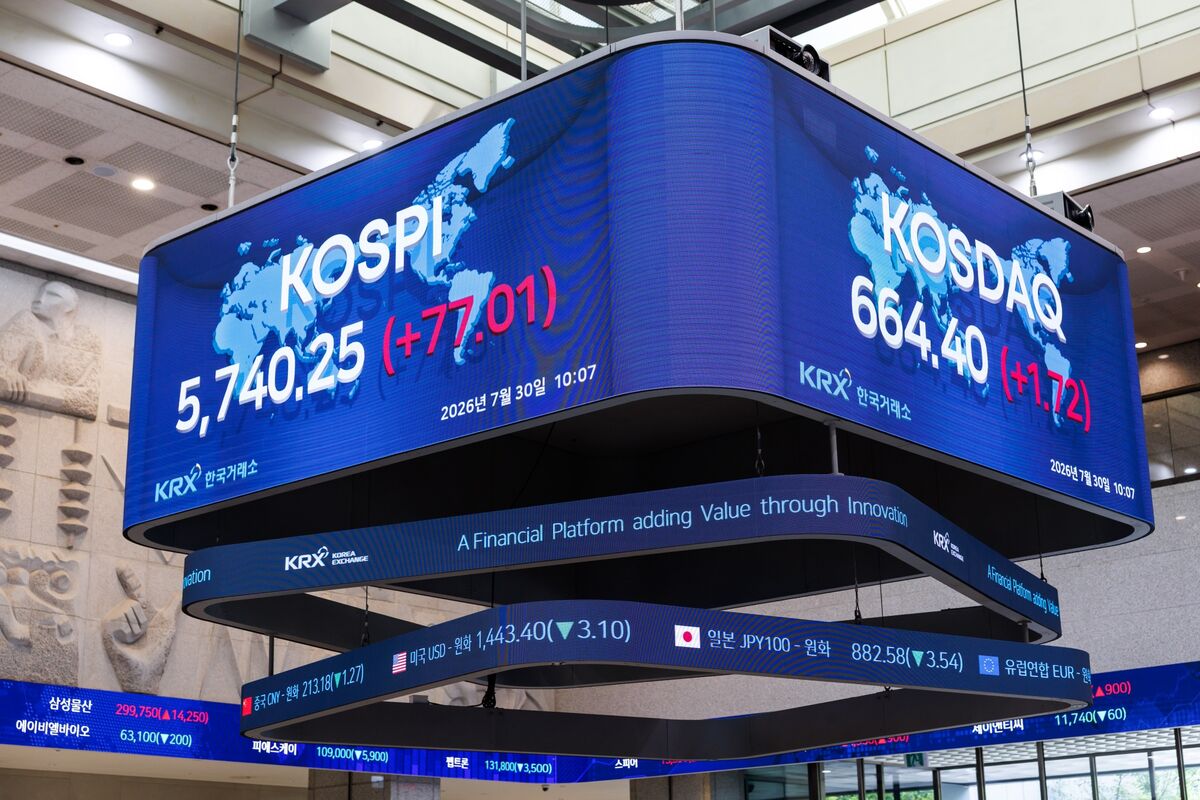
South Korea, once a poster child of the global AI trade, is rapidly losing relevance with investors. Turnover has collapsed 70% from its peak in late May, while foreigners are retreating at the fastest pace in Asia. Local retail investors are also pulling back.
The Kospi, the world's best-performing major equities benchmark in the first half, has since lost 22% to be the worst in the second half, while AI-heavy Taiwanese and US peers set new highs. Behind the reversal is a market whose AI fortunes hinge disproportionately on Samsung Electronics Co. and SK Hynix Inc., the two memory-chip giants at the heart of the global AI supply chain. That concentration is now a liability as investors question the durability of the memory chips' boom cycle, while the brutal leverage-driven selloff in the summer has made some global funds hesitant to return.
Phillip Wool, head of portfolio management at Rayliant Global Advisors, stated that the easy money in the memory chip theme has been made, adding his fund is now underweight SK Hynix and Samsung Electronics. The two chipmakers together account for over half of Kospi's weighting and powered its ascent earlier this year. Foreign funds pulled $131 billion from Korean stocks this year, the most among major Asian markets.
Skepticism over memory chip demand was on full display when shares of Samsung, the world's top producer, fell despite a nearly nine-fold surge in quarterly operating profit. Korea is struggling to lure buyers, amplified by the nearing completion of combined 55 trillion won ($41 billion) stock buybacks by Samsung and SK Hynix. Repurchases by the two chipmakers accounted for the bulk of the $23 billion worth of buy orders in the market last month, according to JPMorgan Chase & Co. Richard Tang, head of research at Julius Baer, noted capital is gravitating back toward US equities, contributing to ongoing foreign outflows.
Margin loans outstanding have hovered around 33 trillion won over the past month, after peaking at 38.6 trillion won in June. Brokerage account balances have also fallen to around 100 trillion won from a record of near 140 trillion won. Jon Withaar, a portfolio manager at Pictet Asset Management in Singapore, noted that while memory names have become value names cheap at current earnings, retail and fast money hedge funds chase growth, not value.
Source: Bloomberg Markets · Summarized by HeadlinesBriefing