
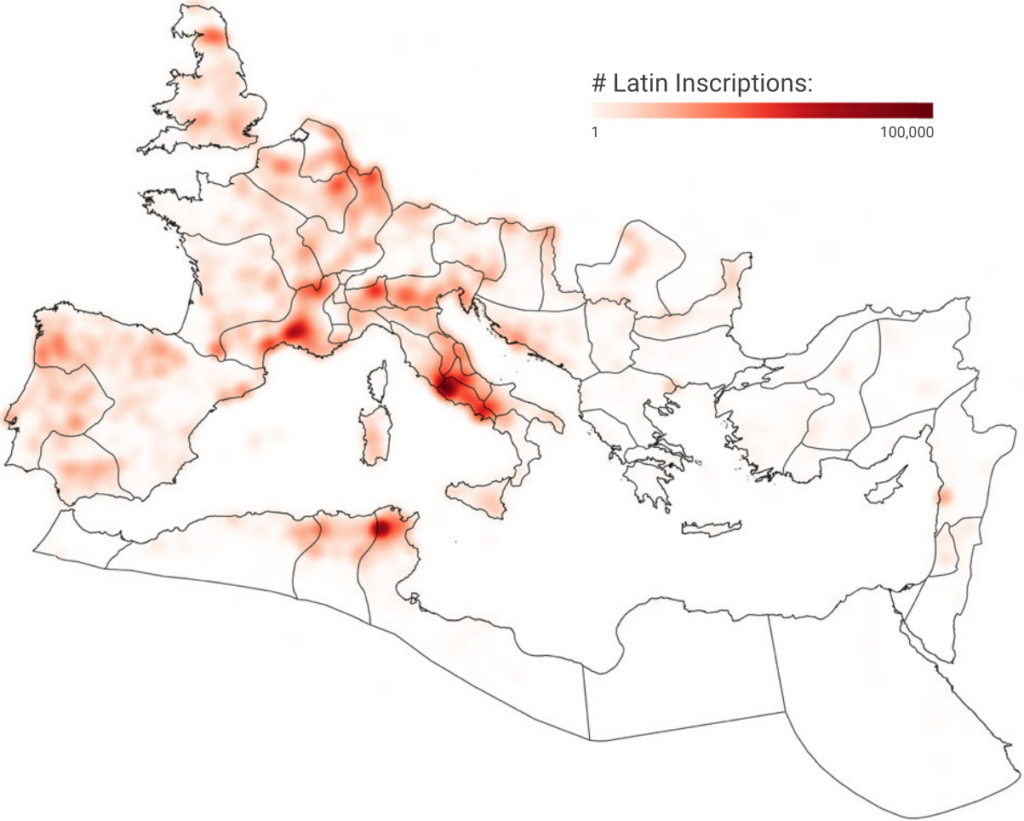
Michele Coscia, a researcher who has long been fascinated by the Roman Empire, set out to measure its economic complexity, a metric used to explain how economies develop. The idea struck him during a presentation by Petra Heřmánková, when he realized that the Roman Empire could be analyzed with the same tools used for modern economies. The team, including Petra Heřmánková, Matteo Mazzamurro, Tom Brughmans, and Coscia, published their findings in the journal npj Complexity.
The study relies on LIST, or Latin Inscriptions in Space and Time, the most complete collection of Latin inscriptions from the Roman Empire. Each inscription includes its location and a digital transcription. Many are funerary or honorific, and many record the deceased's profession, offering evidence of which economic activities took place in which places. The researchers acknowledged significant biases in this evidence. Inscriptions favor high-status occupations, men outnumber women two to one, and farmers, who likely made up most of the workforce, rarely commissioned inscriptions. Survival and modern digitization add further distortion.
Petra Heřmánková worked on correcting for these biases, while Matteo Mazzamurro implemented analyses to account for them. The result was an estimate of how many people worked in each occupation within each province. Latium, home to Rome, showed the greatest range of occupations, and farmers were the most common. The resulting pattern was nested, with most activity concentrated in the top-left quadrant of the heatmap, a classic signature in economic complexity research.
The team also explored an alternative approach. Because the inscriptions carry precise coordinates, the researchers could divide the empire using any geographic boundary, including those of modern countries. This allowed them to compare Roman-era economic complexity with present-day estimates for the same territories.
Source: Hacker News · Summarized by HeadlinesBriefing