
Hospitals, banks and edge devices often want to train one model together, but their tables share a schema while their rows must stay private. This setting, horizontal federated learning, usually relies on Fed Avg, which averages weights from each site. Fed Avg never asks which features belong in the model, so every irrelevant column is carried through every update and adds noise that smaller sites feel most.
Feature Election, a method developed for this gap, asks for less than most research on federated feature selection. Instead of adopting a new purpose-built algorithm, each site keeps the ordinary selector it already trusts, such as a Lasso, random forest importances or mutual information, runs it on its own rows and sends a vote. Each site sends a binary mask of kept features, a vector of preference scores and its sample count. No rows or gradients leave the site during the election.
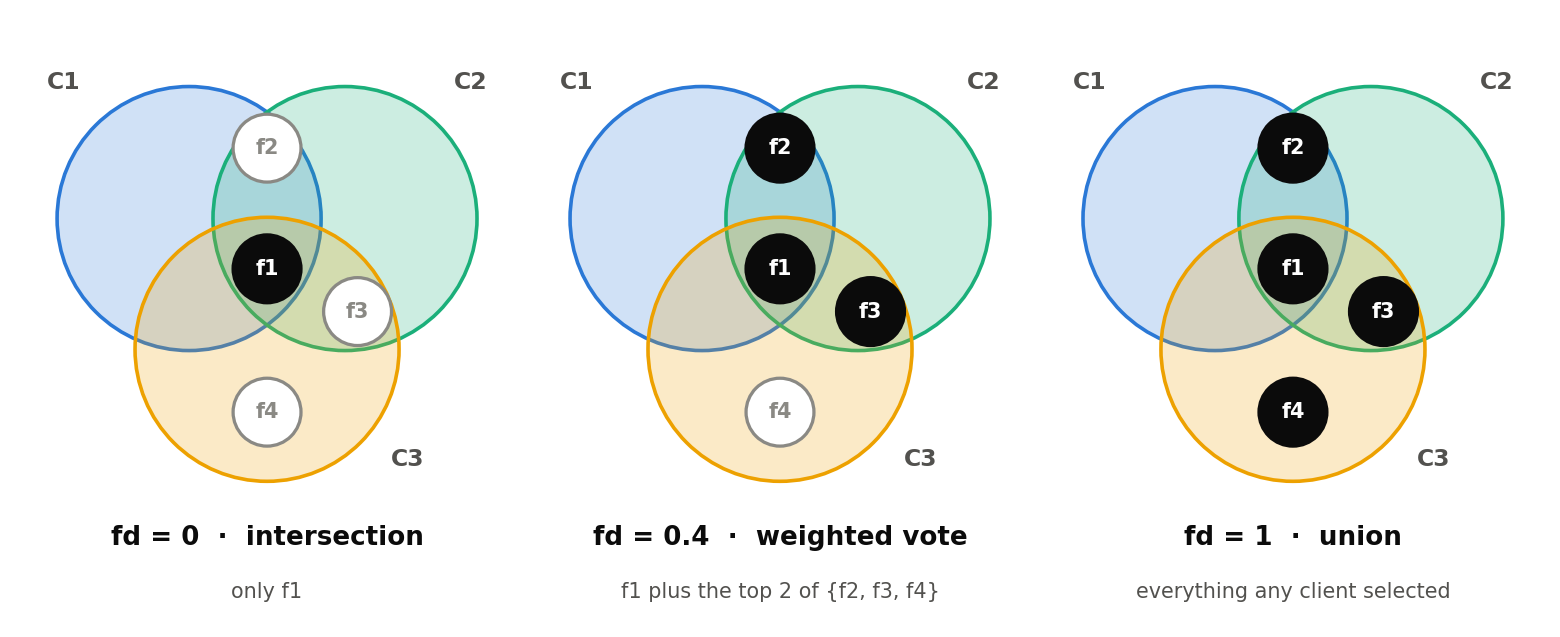
The server keeps features that every site selected and drops those that no site selected. Contested features go to a vote weighted by site size, and a single tunable parameter called the freedom degree decides how many of them enter the model. Every site then applies the resulting global mask to its columns, and ordinary federated training runs on the reduced table.
The approach is implemented in NumPy and demonstrated as a job in NVIDIA FLARE, with code also shown for Flower.
Source: Towards Data Science · Summarized by HeadlinesBriefing