
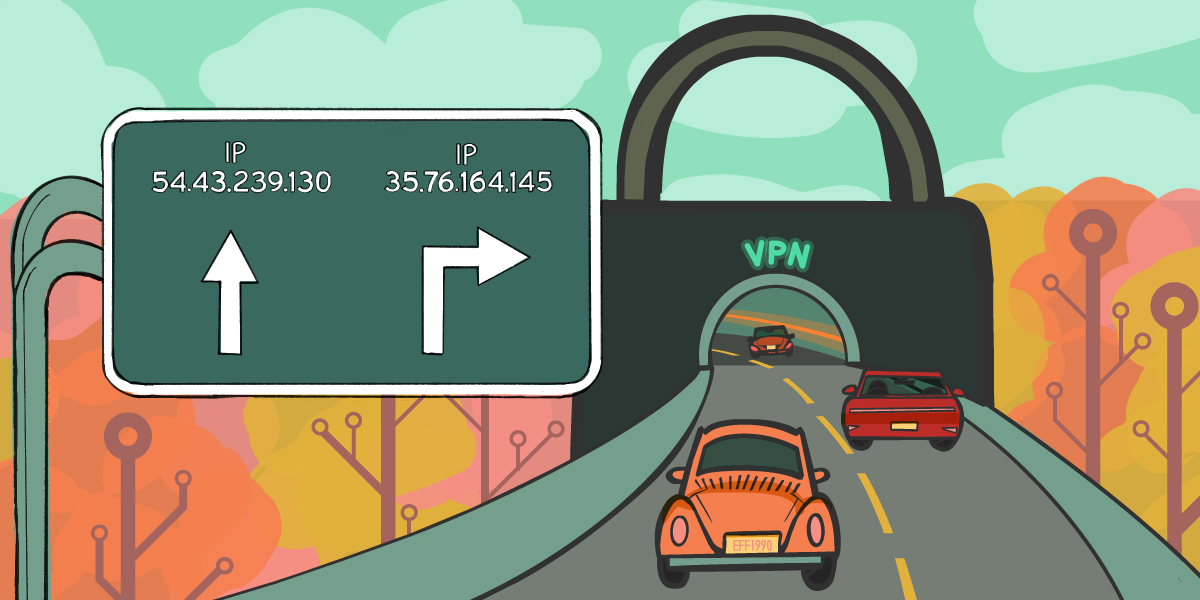
When state lawmakers attempt to rewrite how the internet works, users rely on courts to recognize that laws can’t make technical impossibilities a reality. That’s why we were happy to see that a court has blocked Utah’s attempt to outlaw the privacy protections of Virtual Private Networks (VPNs).
In a win for digital rights, a federal judge has issued a preliminary injunction blocking Utah’s SB 73, the state’s draconian anti-VPN age verification law. The decision comes as EFF submitted our comments to the Utah Department of Commerce, detailing how forcing platforms to detect and block privacy-preserving tools undermines user privacy and security worldwide while demanding the impossible.
Signed into law earlier this year, SB 73 attempted to regulate adult websites by requiring them to block VPN users or to identify the physical location of visitors using them. The Utah federal court halted enforcement of the law's VPN provisions last week, ruling that the law likely violates the U.S. Constitution. The court wrote that “the statute requires a technical impossibility on pain of legal liability” and acknowledged “that geolocation perfection is not presently possible.”
Judge Barlow’s ruling recognizes the fundamental disconnect between state legislation of the internet and how technology works. Aylo, the parent company of major online adult platforms like Pornhub, brought the constitutional challenge. The court essentially ruled that Utah has less-burdensome ways to prevent Utah minors from accessing adult websites than requiring all users in the world to comply with SB 73.
Source: Hacker News · Summarized by HeadlinesBriefing