
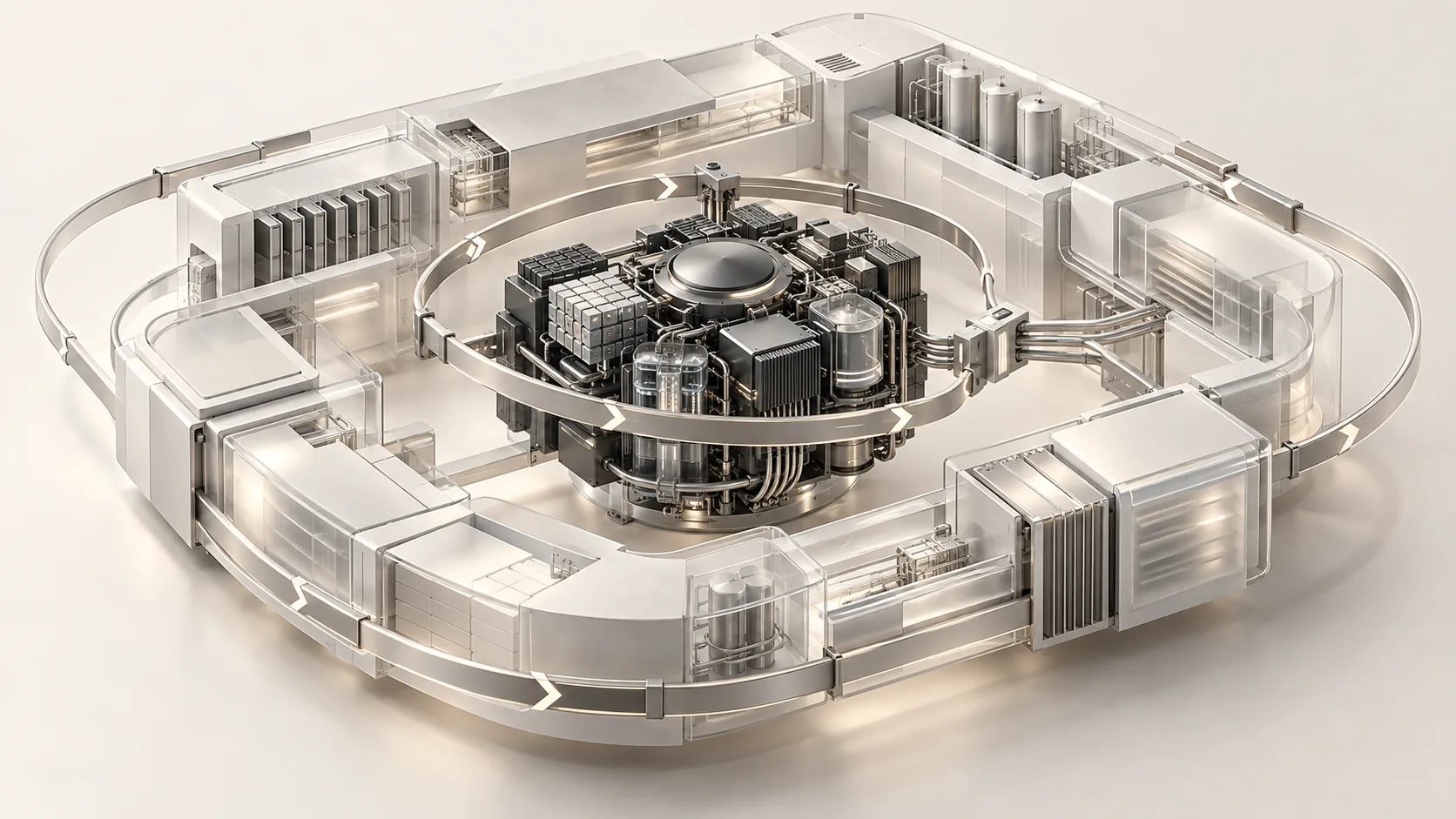
Harrison Chase's discussion of the agent development lifecycle (ADLC) at Interrupt26 NYC prompted reflection on where the ADLC belongs within application development. An agent may investigate an email, but the application determines how the investigation enters a queue, reaches an analyst, or leads to an action. Improving investigation and changing workflow are connected activities with different design questions and evidence of progress.
The ADLC should be coordinated separately but with the application it powers, as agents can change independently while affecting application design and outcomes in a tightly coupled development loop. This loop can be organized through explicit design investigations, shared requirements, and evaluation cases that follow agent results into the application. The same team may own both responsibilities, but each must remain visible and distinct in the development plan.
Existing ADLC guidance includes substantial design and experimental work, with Harrison Chase describing comparisons among prompts, models, retrieval strategies, tool schemas, and orchestration patterns within Build, Test, Deploy, and Monitor. Salesforce begins with Ideation and Design, describing an inner development loop and an outer monitoring loop. Treating the agent as a subsystem means developing its capability explicitly and checking its contribution and impact to the application, starting with examining the system boundary and then the agent's development loop.
Requirements and coordination sections explain how shared evaluation cases connect the work, while the Discussion considers costs and limits of separating lifecycles, and the Conclusion outlines practical steps.
Source: Towards Data Science · Summarized by HeadlinesBriefing