
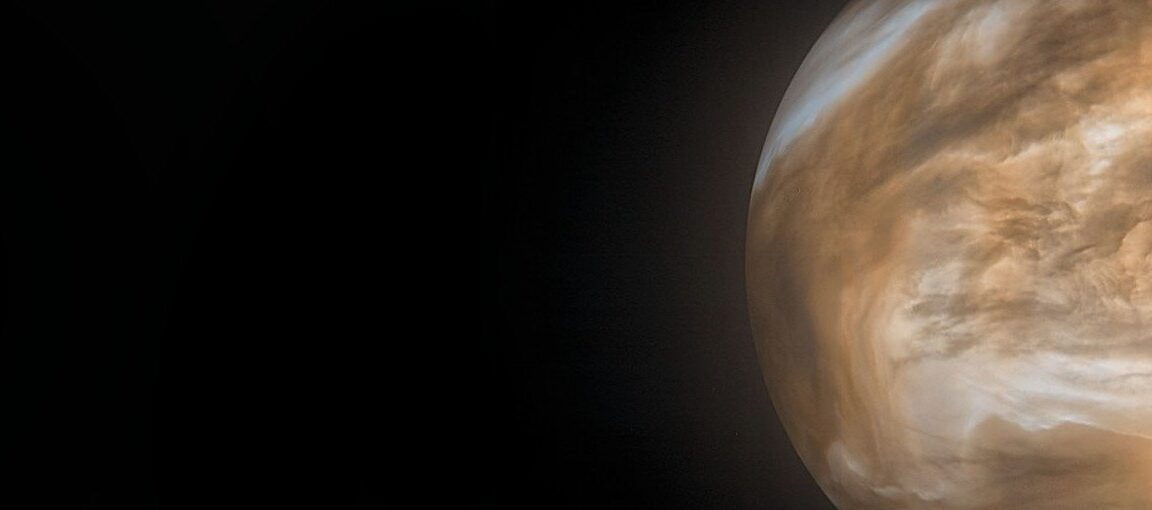
Venus' mysterious haze is actually cosmic dust from meteorites, according to a study by planetary scientist Hiroki Karyu and his team at Tohoku University in Sendai City, Japan. The yellowish "lower haze" at the bottom of Venus' atmosphere was discovered by the Venera and Pioneer Venus probes in the 1970s but remained unexplained for decades. The researchers used a microphysical model to determine that shooting stars burning up in Venus' atmosphere leave behind cosmic dust particles, which interact with sulfuric acid to form the haze.
Previous speculation suggested volcanic ash or surface dust as the source, but these were ruled out because they cannot interact with atmospheric sulfur in the right way. When space rocks enter Venus' atmosphere, friction causes them to burn up and leave particle trails. Sulfuric acid droplets condense around these meteorite particles, which stick together to form larger clusters.
These condensates grow heavier until they sink into the lower atmosphere, where sulfuric acid evaporates at temperatures up to 100°C, leaving behind the haze-forming particles. This discovery also resolved another mystery about what absorbs ultraviolet rays in Venus' atmosphere. The continuous influx of cosmic dust is sufficient to sustain the lower haze layer with the particle size distribution observed by entry probes, Karyu said in the study published in Nature Astronomy.
Source: Ars Technica · Summarized by HeadlinesBriefing