
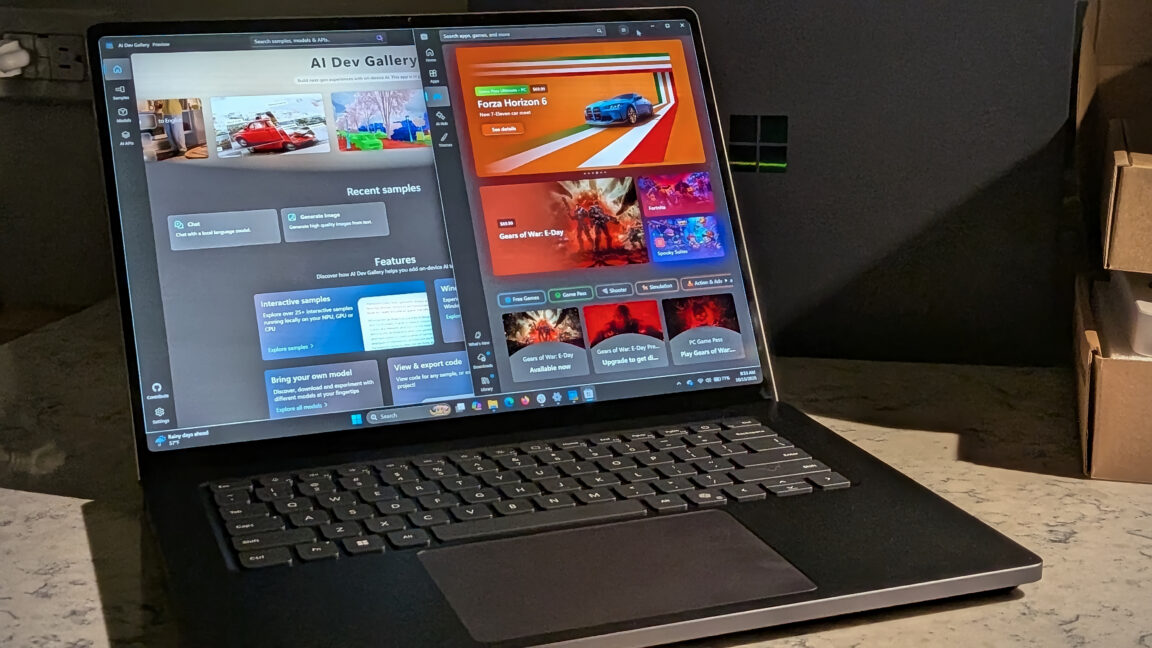
Microsoft promises one machine for development, AI, and gaming, and the Surface Laptop Ultra mostly gets there. Over the past week, the laptop has summarized books and movies, generated images, and run a 70-billion-parameter AI model that would be a stretch on most laptops. It also played AAA games at a speed and fidelity the reviewer would have thought impossible on an ARM system just a year ago. Microsoft is betting that buyers will pay more for one machine that handles both gaming and work, rather than a gaming desktop and a separate development laptop. The laptop is built around the new Nvidia RTX Spark platform and is aimed at buyers who might otherwise choose a MacBook Pro.
The launch comes at a difficult time for personal computing. Industry figures showed a 20 percent drop in total PC shipments year over year in the third quarter of 2026, and rising memory costs have pushed consumer prices up. Dell's XPS 16 Creator Edition and Asus's Pro Art series also use the same chipset. The central question is not whether the device performs its advertised tasks, but whether power users have a compelling reason to switch to an ARM system and whether their daily workloads run smoothly compared with x86 machines or the MacBook Pro.
The Surface Laptop Ultra is priced for the high end. It starts at $2,599 and can reach $5,899 depending on processor and memory options. The base 24GB model ships with Windows 11 Home, while other configurations include Windows 11 Pro. The reviewer tested the 64GB model and considers it the sweet spot for cost and performance. Questions remain about whether 24GB of unified memory is sufficient, especially when Windows 11 is memory-hungry and part of that memory is allocated to VRAM for gaming.
So has the Microsoft and Nvidia partnership produced the ultimate all-in-one laptop? Or is the industry once again placing hardware hype ahead of finished software? Microsoft may have a clearer answer in a few months, once software and drivers catch up with the hardware.
Source: Ars Technica · Summarized by HeadlinesBriefing