
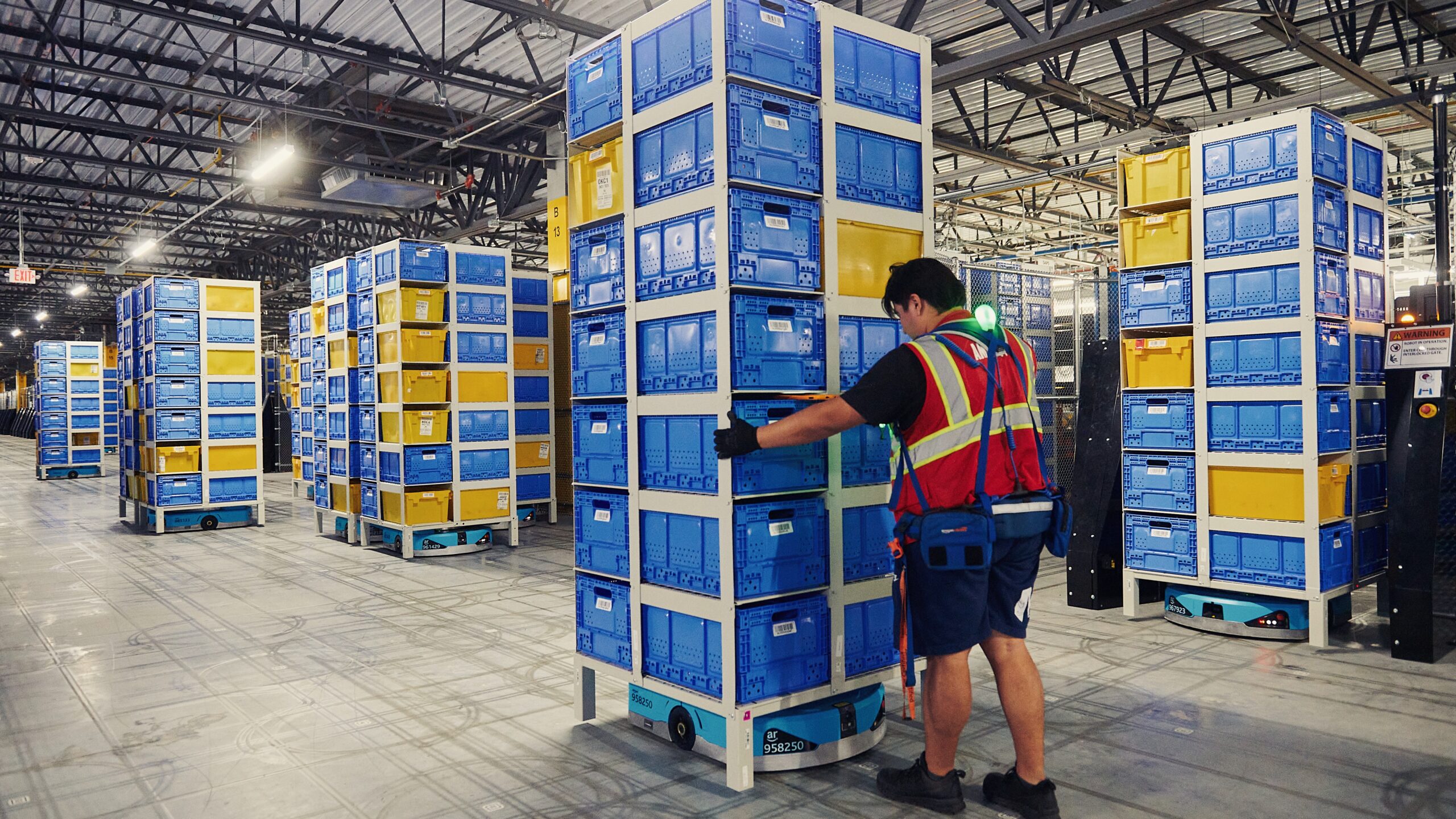
Amazon operates over 1 million robots in its fulfillment centers, making it the world's largest operator of robotic systems. Despite this automation, the company remains the second-largest corporate employer globally with more than 1.5 million human workers, according to its 2025 annual report. Executives claim the robot fleet reduces physical strain by handling dangerous, repetitive tasks in warehouses.
However, labor advocates and researchers warn that collaborative robots working alongside humans may increase pressure by dictating work pace and creating proximate human-robot interactions. Brian Greenwood, professor of business at George Mason University, notes this shifts automation from distant to direct worker collaboration, changing traditional safety dynamics. The injury rate in US warehouses remains more than double the national average, driven by high turnover and physically demanding 'dull, dirty and dangerous' work.
Amazon's robotic expansion began with its 2012 acquisition of Kiva Systems, now Amazon Robotics, which pioneered mobile shelf-moving robots. The company manufactures most robots in-house and plans new production facilities in Austin, Texas, and Greenwood, Indiana. As Amazon scales its robotic fleet to support 200 million Prime subscribers' fast deliveries, the balance between human labor and machine efficiency continues to evolve in complex ways.
Source: Ars Technica · Summarized by HeadlinesBriefing