
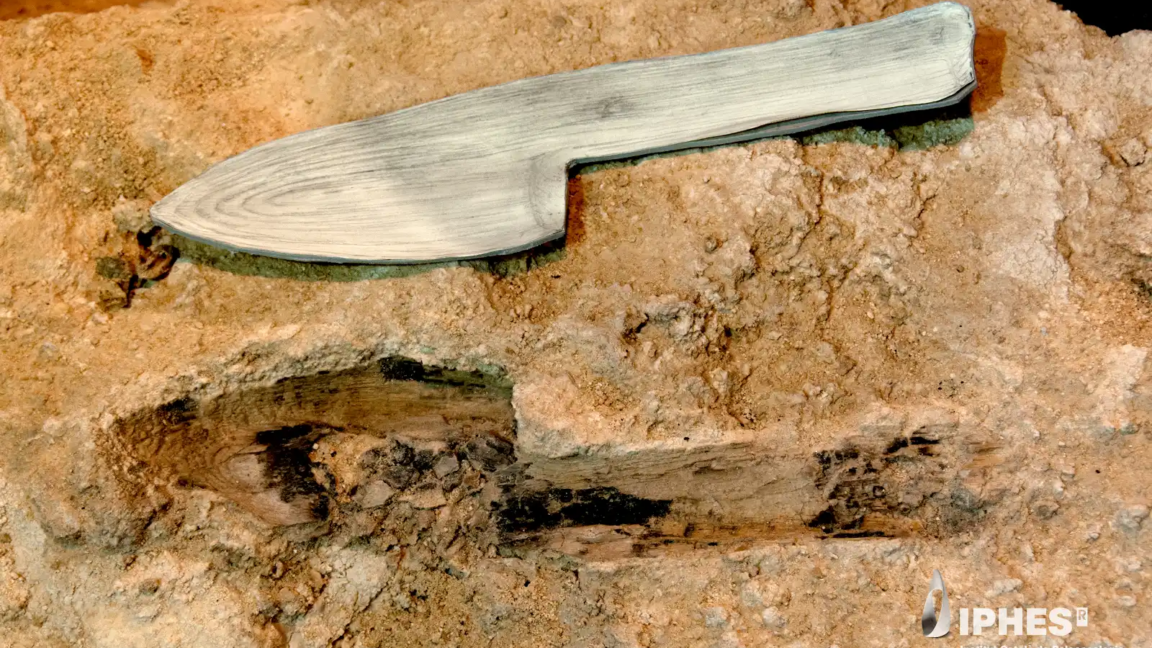
Dissolved rock precipitated around wooden Neanderthal tools at Abric Romaní, a rock shelter west of Barcelona, creating limestone-like crusts that preserved hollow molds when the wood decayed. In a recent Science Advances study, Spanish archaeologists cataloged 597 wooden remains dating from 62,000 to 40,000 years ago. Beyond typical hunting gear like spears, the collection includes digging sticks, bark trays, shelter parts, and a unique club, suggesting Neanderthals engaged in diverse subsistence activities.
The site's mineral-rich water coated tools in travertine, sealing them and allowing detailed 3D preservation of wood cell outlines. Researchers used 3D scanning and printing to study and display the finds. Most remains were natural wood, but 13 objects show intentional modification, proving routine woodworking.
Shallow juniper bark trays near hearths may have carried food, while crossed poles suggest structured shelter construction over a 20,000-year occupation period.
Source: Ars Technica · Summarized by HeadlinesBriefing