
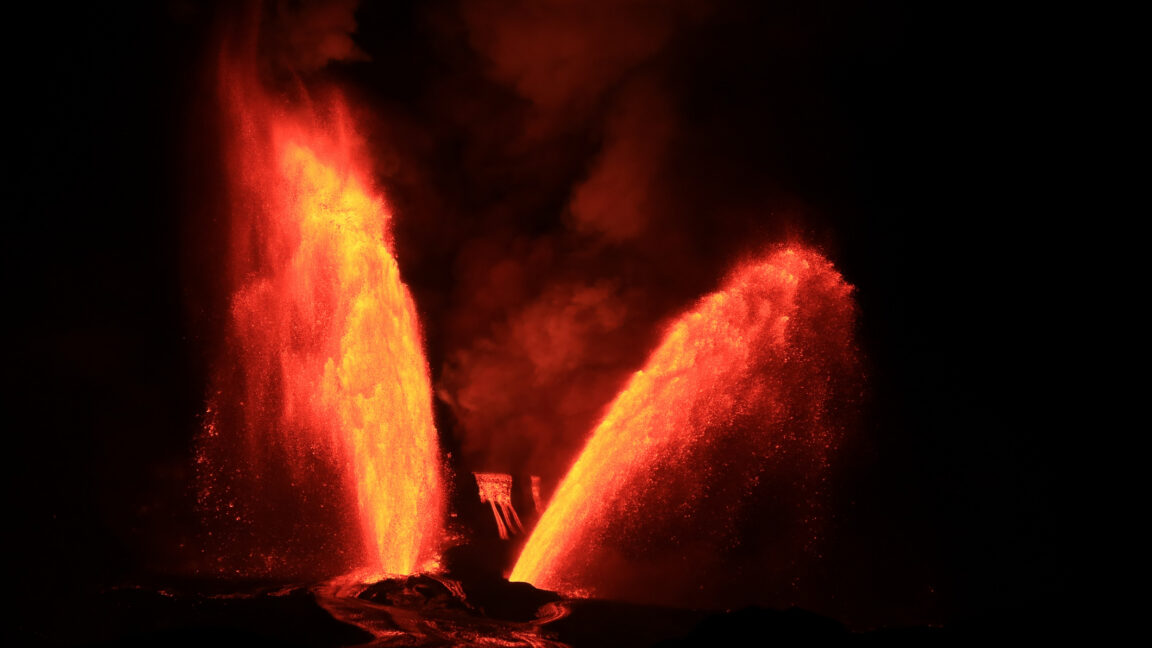
Hawaii's lava fountains, which can reach heights of over 400 meters, are driven by complex volcanic processes that scientists are still working to fully understand. While hotspot-driven volcanism is typically slow and manageable, certain locations like Hawaii, Mount Etna, and Iceland produce dramatic fountains of molten rock. The Kilauea volcano, Hawaii's youngest and most active volcano, has provided researchers with unprecedented data due to its recent activity and extensive monitoring network.
Following a major 2018 eruption, Kilauea's magma reservoir began refilling rapidly, with inflation rates doubling from 22 cm to 57 cm per year between 2019 and 2023. In 2024, a series of earthquakes preceded the opening of a 900-meter-long fissure, producing lava fountains up to 160 meters high. This was followed by 52 additional eruptions, with the most violent spewing lava over 400 meters into the air. The US Geological Survey discovered they could predict these eruptions by monitoring summit tilt levels, as consecutive eruptions occurred when tilt reached similar thresholds.
The recent eruptions have provided insights into fountain formation mechanisms. One theory suggests water in magma turns to steam at shallow depths, fragmenting magma and creating a jet effect. Another proposes carbon dioxide foam formation at the magma chamber roof, with gas release driving magma upward. However, the new data doesn't support the CO2 foam theory, as gas levels remained low throughout the eruption cycle. Sulfur dioxide levels rose during eruptions but remained high overall, suggesting this chemical plays a significant role in the process.
Source: Ars Technica · Summarized by HeadlinesBriefing