
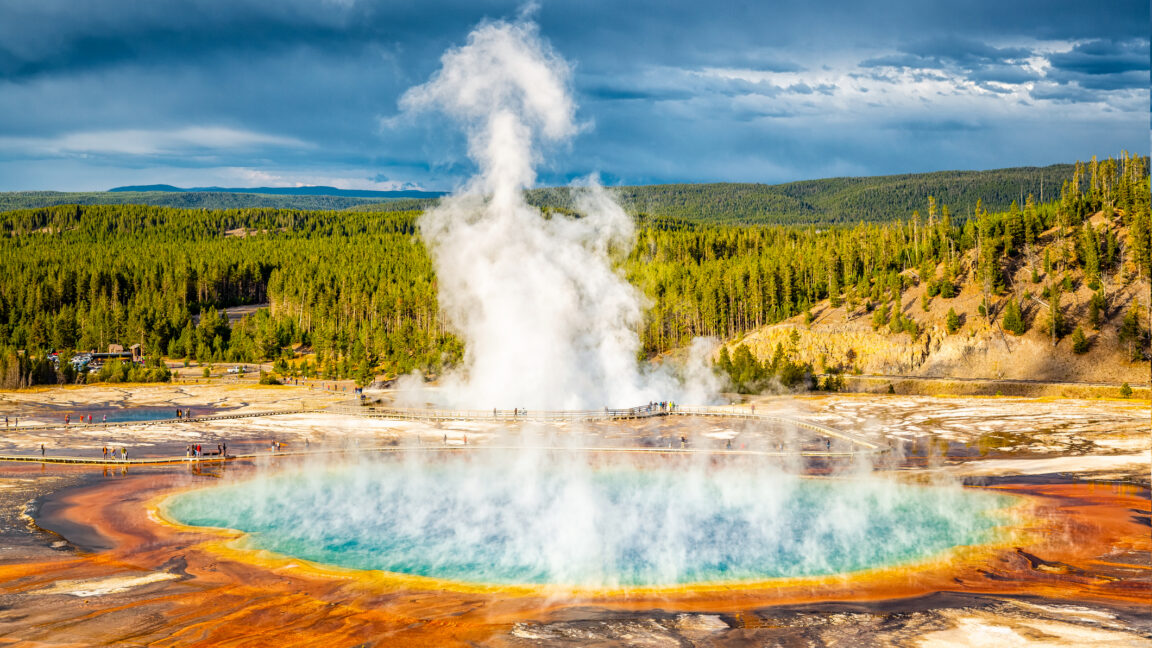
Farallon plate remnants beneath North America may explain Yellowstone's eruptions, challenging the mantle plume theory, according to a new Science study. Researchers propose that stresses from the vanished plate's sinking created fractures allowing magma to reach the surface, forming the Yellowstone hotspot. This model, called TLMPS (translithospheric magma plumbing system), suggests crustal stresses—not deep mantle plumes—drove volcanic activity.**
The study maps two magma pathways: one feeding Yellowstone's caldera and another the Snake River Plain. The gap between them aligns with a thick crustal boundary where Farallon-driven flows encounter denser North American plate material. Compressive forces and downward mantle drag in this zone likely opened dual conduits, explaining divergent eruption styles—caldera-forming versus flood basalts.**
Farallon plate fragments still slide under western North America, powering Cascade volcanoes. But Yellowstone's unique geology arises from localized stress interactions, not just plume activity. The model avoids invoking mantle plumes entirely, instead showing how historical plate movements shape present-day volcanism through crustal deformation.**
While compelling, the static model doesn't address why eruptions clustered at Yellowstone rather than other Farallon remnants. Critics may question why similar stresses didn't trigger volcanism elsewhere. Nonetheless, it highlights how ancient plate tectonics indirectly sculpt modern landscapes—a reminder that Earth's surface is a palimpsest of geological history.
Source: Ars Technica · Summarized by HeadlinesBriefing