
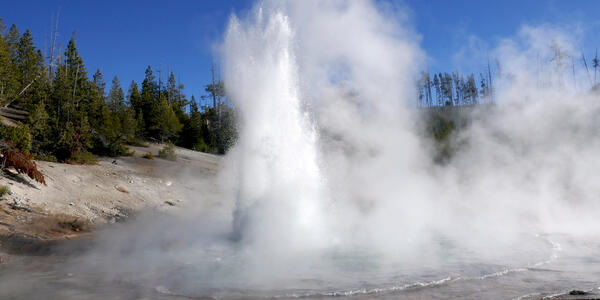
After years of quiet, Echinus Geyser in Yellowstone's Norris Geyser Basin has sprung back to life with multiple eruptions since February 2026. The geyser, known as the world's largest acidic geyser, began showing activity with surges and eruptions starting February 7, marking its first significant activity since December 2020. These eruptions reach heights of 6-10 meters (20-30 feet) and last 2-3 minutes.
Echinus is unique among geysers for its acidic chemistry, which comes from mixing acidic gases with neutral waters. The geyser pool spans about 20 meters (66 feet) across and features distinctive red coloration from iron, aluminum, and arsenic compounds. The geyser's name comes from mineralogist Albert Charles Peale, who visited in 1878 and thought the surrounding rocks resembled sea urchins (echinoderms). The geyser's plumbing system has survived because the acidity isn't strong enough to break down the rock.
Historically, Echinus was a reliable performer from the 1970s through the 1990s, erupting every 40-80 minutes with durations sometimes exceeding 90 minutes. The geyser's activity pattern shows it tends to wake up for months at a time before going dormant again. Park visitors can track current eruptions through temperature graphs on the Yellowstone Volcano Observatory website, where eruption spikes reach about 70°C (158°F). Whether this current activity will continue through summer remains uncertain given the geyser's sporadic history.
Source: Hacker News · Summarized by HeadlinesBriefing