
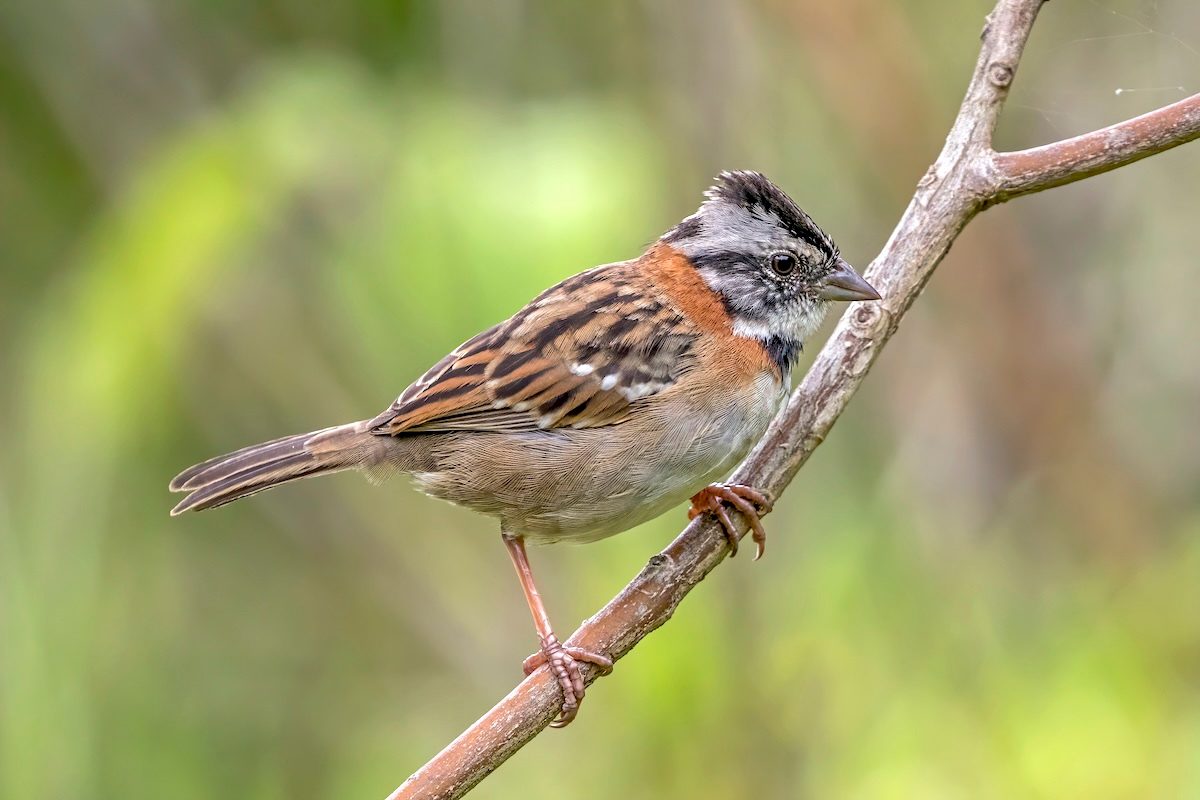
When bird populations decline, fledglings may struggle to learn the songs they need to attract mates. New research suggests it is possible to teach birds lost songs. When researchers heard a particular tune emerging from a tree in a Buenos Aires park, they were especially jubilant. The arrangement had been sung by local rufous-collared sparrows in the 1960s but had since disappeared from the area. Scientists created a computer-generated rendition to find out whether birds would consider it realistic enough to imitate. Less than three months later, a local resident began to copy parts of the song.
There is a growing recognition of birdsong's importance to conservation. An individual that sings well, in a familiar "dialect," is better placed to find a mate, defend its territory and survive. If a species' population declines, however, fewer fledglings have the chance to become good singers. Birds can begin to tweet abnormally or mistakenly learn the songs of other species, jeopardizing their chances of breeding. "If your song requires a lot of energy, you might have to be in quite a good condition to sing it," says Rebecca Lewis, a conservation scientist at Chester Zoo.
Gabriel B. Mindlin, professor of physics at the University of Buenos Aires, coauthored the study on rufous-collared sparrows. He argues that animals' learned behavior, or culture, such as birdsong, is an essential part of their population, not just their genes. The rufous-collared sparrow is not considered vulnerable globally, but researchers hope synthetic recordings could help teach birdsong to other dwindling species, allowing conservationists to tutor individuals where real-life recordings do not exist.
About 4,000 of the world's 10,000 bird species are songbirds, such as finches, sparrows and blackbirds. Their songs are hugely diverse, yet they share common motifs, and the way birds use these motifs reflects the environment in which they evolved. The song studied by Mindlin was recreated from hand-drawn annotations made in the 1960s. Some themes recorded decades ago are still sung locally, while others have died out, possibly because the park's bird population declined.
Source: Hacker News · Summarized by HeadlinesBriefing