
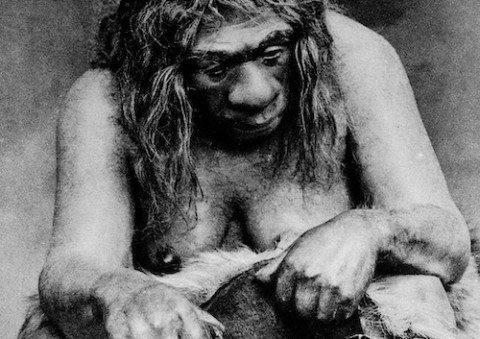
In 1856 quarrymen digging in a cave in the Neander Valley in west Germany came upon the bones of what they assumed to be an old cave bear. Realising it was a strange human with a shallow, sloping forehead, huge brow ridge, and massive limbs, Johann Carl Fuhlrott, a local schoolteacher, collected the bones and took them to the University of Bonn. Neanderthal 1 would become the first ancient hominin recognised as being from another species, *Homo neanderthalensis*.
*Neanderthals Among Us* is the first book to tell the story of Neanderthals in science and popular culture. Peter Sahlins summarises the history of scientific Neanderthal research, from early racial science to ancient DNA analysis, alongside a vast corpus of Neanderthal imagery comprising novels, poetry, films, cartoons, advertisements, and computer games.
Sahlins shows how the Western imagination was populated by satyrs and Wild Men, lesser doubles who lacked speech and reason. Colonial explorers relocated the folkloric Wild Man into reports about indigenous peoples and great apes, creating conditions from which the first racial sciences arose. From 1856 skulls were organised into a racialised hierarchy, with European crania at the top and Neanderthals at the bottom.
Throughout the 19th and 20th centuries, Neanderthals were portrayed as brutes and rapists. The fantasy novel *Quest for Fire* conjured a world of 'coarse brutes', and *Clan of the Cave Bear* novels featured hair-dragging rape scenes, causing bans from American public libraries. Using the News on the Web corpus, Sahlins reveals a worldwide spike in English-language usage of 'Neanderthal' coinciding with Donald Trump's presidential campaigns.
Source: Hacker News · Summarized by HeadlinesBriefing