
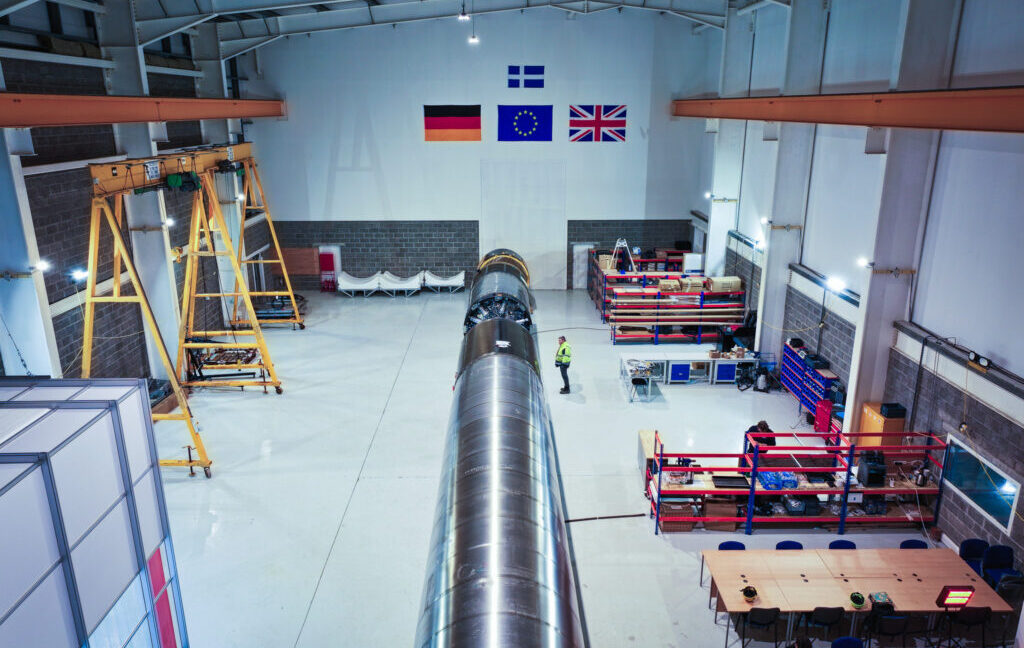
German startup Rocket Factory Augsburg has firmed up an August 10 launch window for the inaugural RFA One flight from Saxa Vord Spaceport in Scotland, nearly two years after a static-fire explosion destroyed a first stage. The same week, Northrop Grumman flew the final Pegasus XL mission from Kwajalein Atoll, air-launching Katalyst Space Technologies' Link satellite to boost NASA's aging Swift observatory into a low-inclination orbit that would have required a far larger rocket from Cape Canaveral.
The US Space Force added Impulse Space and Relativity Space to its National Security Space Launch competition. Impulse's Helios kick stage promises up to 9 km/s of delta-V, effectively turning a Falcon 9 into a heavy-lift vehicle for direct geostationary insertion. Meanwhile, Isar Aerospace signed a deal with Maritime Launch Services to build a dedicated Spectrum rocket pad in Nova Scotia, investing roughly $100 million with first launches targeted for 2028 — giving Canada sovereign launch access before domestic vehicles mature.
United Launch Alliance flew the 110th Atlas V, the ninth for Amazon's Kuiper constellation, leaving six vehicles allocated for Boeing Starliner crew missions. ArianeGroup and Beyond Gravity extended their partnership with a contract for 27 payload fairings covering Ariane 6 flights 16 through 42, the largest deal in Beyond Gravity's launch history.
The flurry of activity underscores a launch market fragmenting by orbit and payload class: small European rockets chase dedicated smallsat slots, kick stages unlock new mission profiles for medium lift, and legacy vehicles exit only after locked-in manifests drain inventory. Canada's bet on a German tenant illustrates how allies are bypassing domestic development timelines to secure independent access to space.
Source: Ars Technica · Summarized by HeadlinesBriefing