
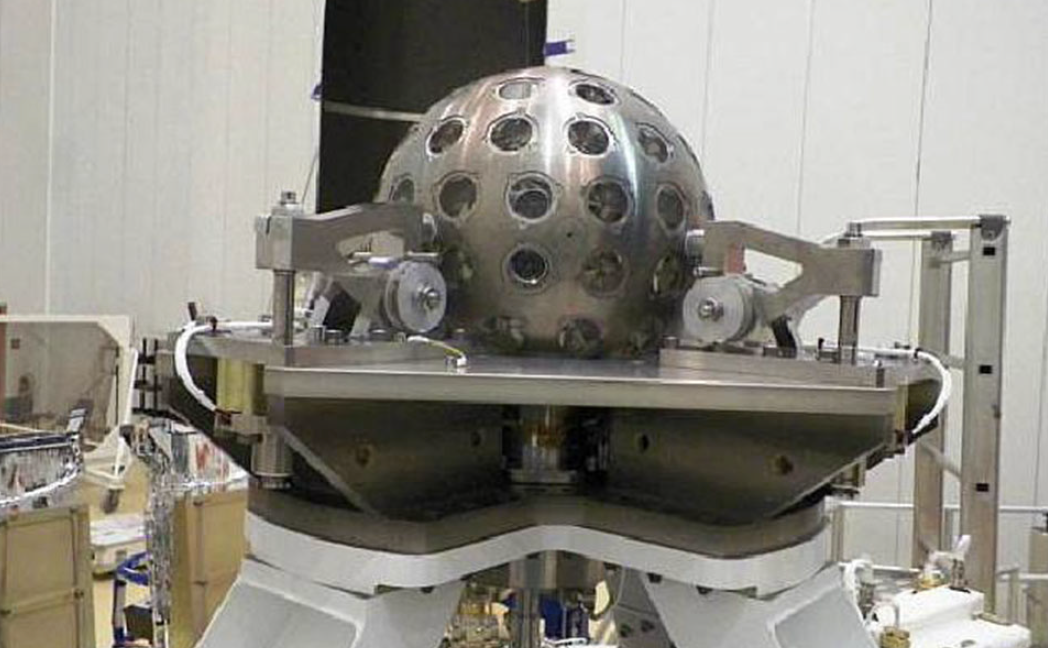
Astronomers have achieved the most precise measurement yet of frame dragging, a phenomenon predicted by Einstein's general theory of relativity where a rotating mass like Earth twists spacetime. The experiment utilized the LARES-2 satellite, a dense, 294.8-kilogram sphere covered in retroreflectors, designed to minimize non-gravitational forces. Launched in July 2022, LARES-2 orbits at approximately 12,265 kilometers.
To overcome challenges posed by Earth's non-spherical shape and gravitational perturbations, researchers employed a technique involving two satellites in supplementary orbits: LARES-2 and NASA's older LAGEOS satellite. By tracking both with ground-based lasers and analyzing approximately 200,000 observations over a 1,050-day period, the team effectively canceled out Newtonian forces and averaged out tidal effects. This allowed them to isolate the subtle frame dragging signal.
The measurement confirmed Einstein's predictions with an uncertainty of only 0.2 percent. While not ruling out alternative theories like Chern-Simons theory entirely, the findings significantly narrow its potential variations. This enhanced precision in measuring frame dragging could also yield new insights for earth science, particularly in understanding tides and potentially aiding earthquake studies.
Source: Ars Technica · Summarized by HeadlinesBriefing