
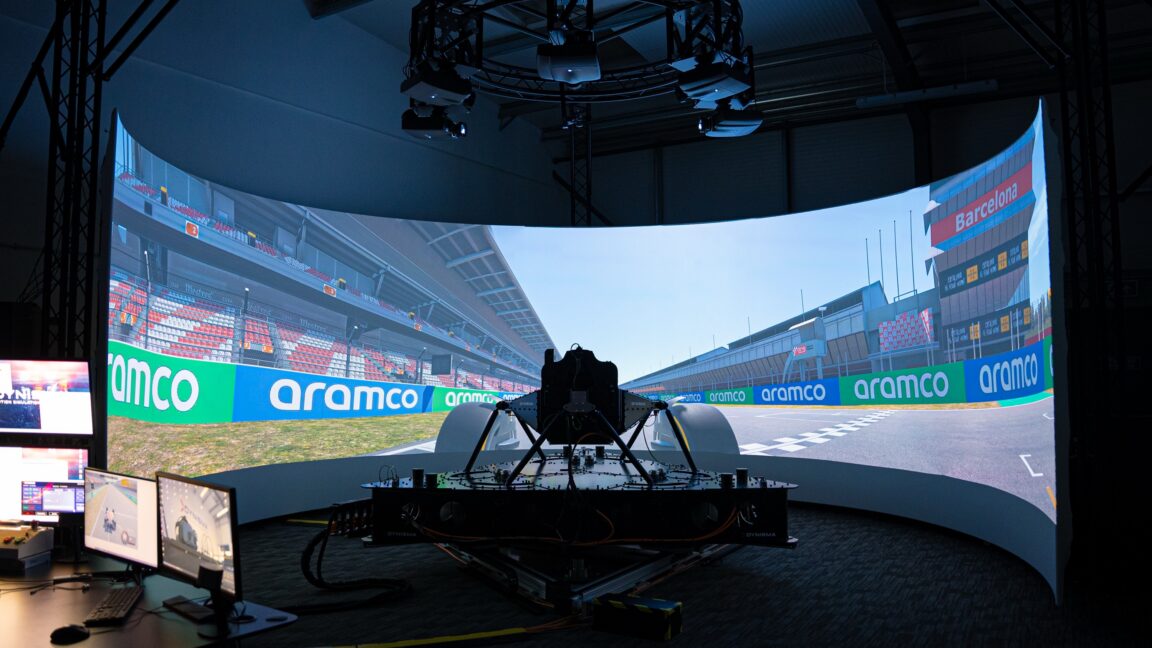
Formula 1 teams now pour between $3 million and $10 million into driver‑in‑the‑loop simulators, devices that mimic every nuance of a car’s behavior. Originating in the early 2000s at outfits such as McLaren, these rigs have evolved alongside high‑end consumer setups but retain a secretive edge. The goal is to let a world‑class driver feel the car’s response as if it were on track.
Latency and bandwidth define a simulator’s usefulness. Dynisma Motion Generators, supplier to Ferrari and Alpine, targets a closed loop of 3 milliseconds from physics model to chassis movement—an order of magnitude faster than commercial flight simulators. High‑frequency vibrations from road bumps, engine torque and tire slip travel through the platform, demanding far greater data throughput than the slow, sustained motions of aerospace rigs.
Sim drivers translate those precise cues into actionable data. Cadillac’s Simon Pagenaud runs up to 50 setup variations per weekend, measuring tire energy loss and grip to guide engineers before a session ends. By correlating on‑track performance with simulator output, teams shave tenths of a second per lap and extend tire life, directly influencing race results. The impact is measurable.
Source: Ars Technica · Summarized by HeadlinesBriefing