
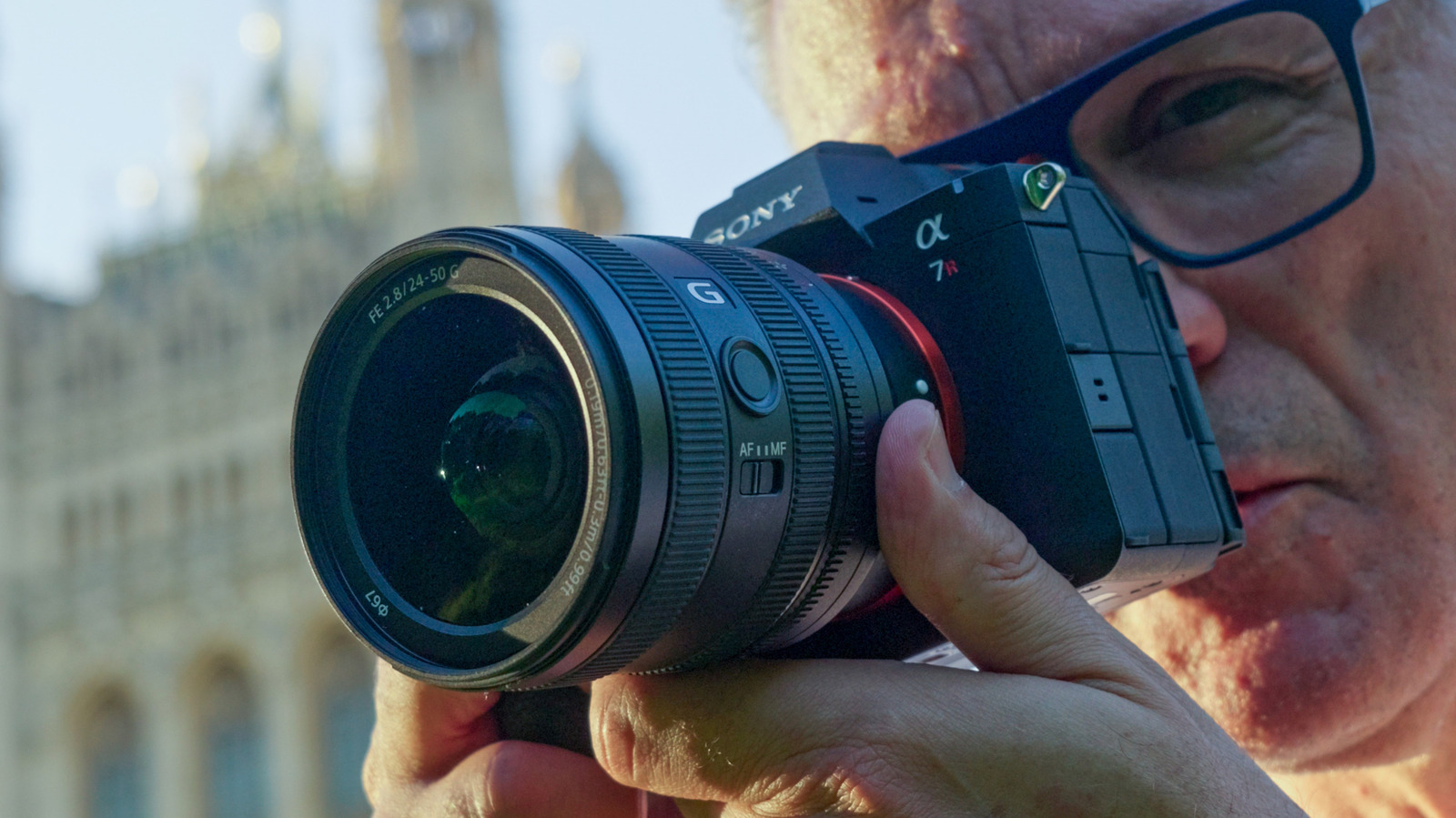
If you've decided to buy a Sony camera for the outstanding technology, ease of use and other good reasons, which one should you get? The company has a number of lineups on offer, including the A1, A7 and A9... but wait, is that an "A" or the Greek symbol for "alpha?" Some of those A7 models also have letter suffixes, like A7C, A7R and A7S, along with roman numerals afterwards (III, IV, V, etc.). Then, there are models with much bigger numbers like the A6400 and A6600, some that start with "RX" and others with "ZV" in the name. It's confusing, but there is some logic to it.
Sony's camera lineup can be divided into two categories, mirrorless and compact. The company's mirrorless models all have the same prefix: α, the symbol for "alpha." Within the "A" lineup, Sony has two categories, namely full-frame and cropped-frame (also called APS-C) cameras. Full-frame cameras have larger sensors that allow you to blur the background behind subjects more and shoot clearer photos at night. APS-C models offer most of the benefits but are cheaper and easier-to-use for beginners.
Full-frame mirrorless models are divided into sub-categories. The A1 series is the alpha of the bunch with the highest price, aimed at pros, using a fast "stacked" sensor for high-resolution 50-megapixel photos at up to 30 fps. The A9 is designed for professionals, particularly sports shooters, with the A9 III featuring a "global" sensor for 120 fps RAW shooting. Finally, A7 designates Sony's mainstream mirrorless lineup, divided into four categories: the mainstream A7 V, the high-res A7R VI, and the video-focused A7S series.
Source: Engadget · Summarized by HeadlinesBriefing