
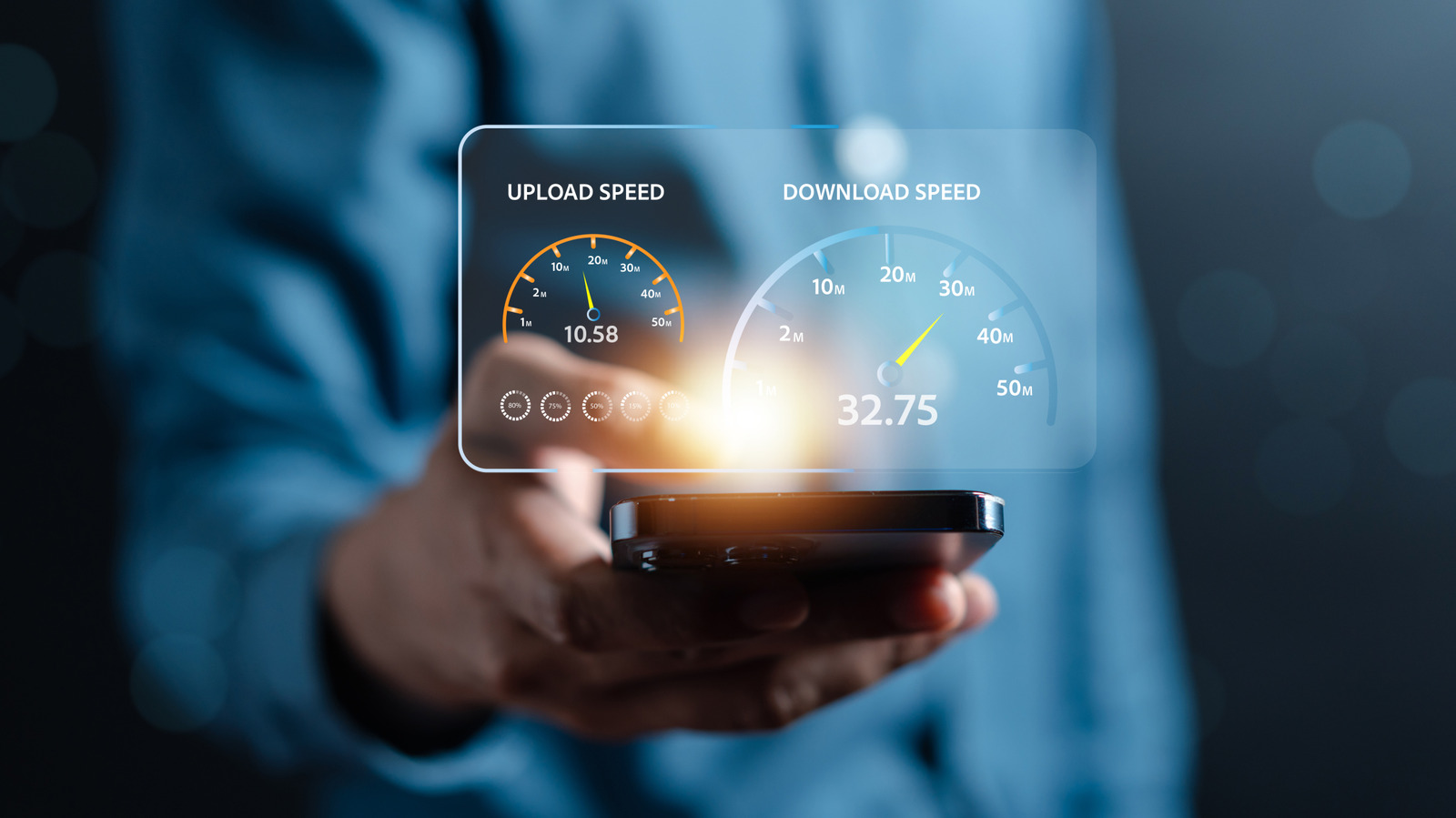
Understanding the differences between internet speed and bandwidth can be confusing, given that internet service providers (ISPs) typically sell bandwidth as "speed" and use both terms interchangeably. Also, both are measured in megabits per second (Mbps) and gigabits per second (Gbps), making it even less clear which is being referenced.
Internet speed, in a nutshell, is the amount of data your network sends and receives at any given moment. Bandwidth is the theoretical maximum capacity of data your connection can carry per second. Your bandwidth sets the ceiling for your internet speed; it can get close to the bandwidth but never go past it.
Think of your internet connection like a highway. Your bandwidth sets how many lanes it has, while internet speed is how many cars reach their exit each second. If your internet plan caps out at 100 Mbps, and three people are streaming 4K movies on Disney+ (25 Mbps each), another is on a video call and a fifth is downloading a large game update, your network is maxed out. The streams may start to buffer; nothing went wrong—your household simply hit the plan's ceiling.
What most people refer to as internet speed is actually throughput. When you run a speed test, the number it shows is your throughput, which can never exceed your bandwidth. Meanwhile, latency is how long it takes for data to move from your device to the server and back, measured in milliseconds (ms); in tests it shows up as ping (lower is better).
Source: Engadget · Summarized by HeadlinesBriefing