
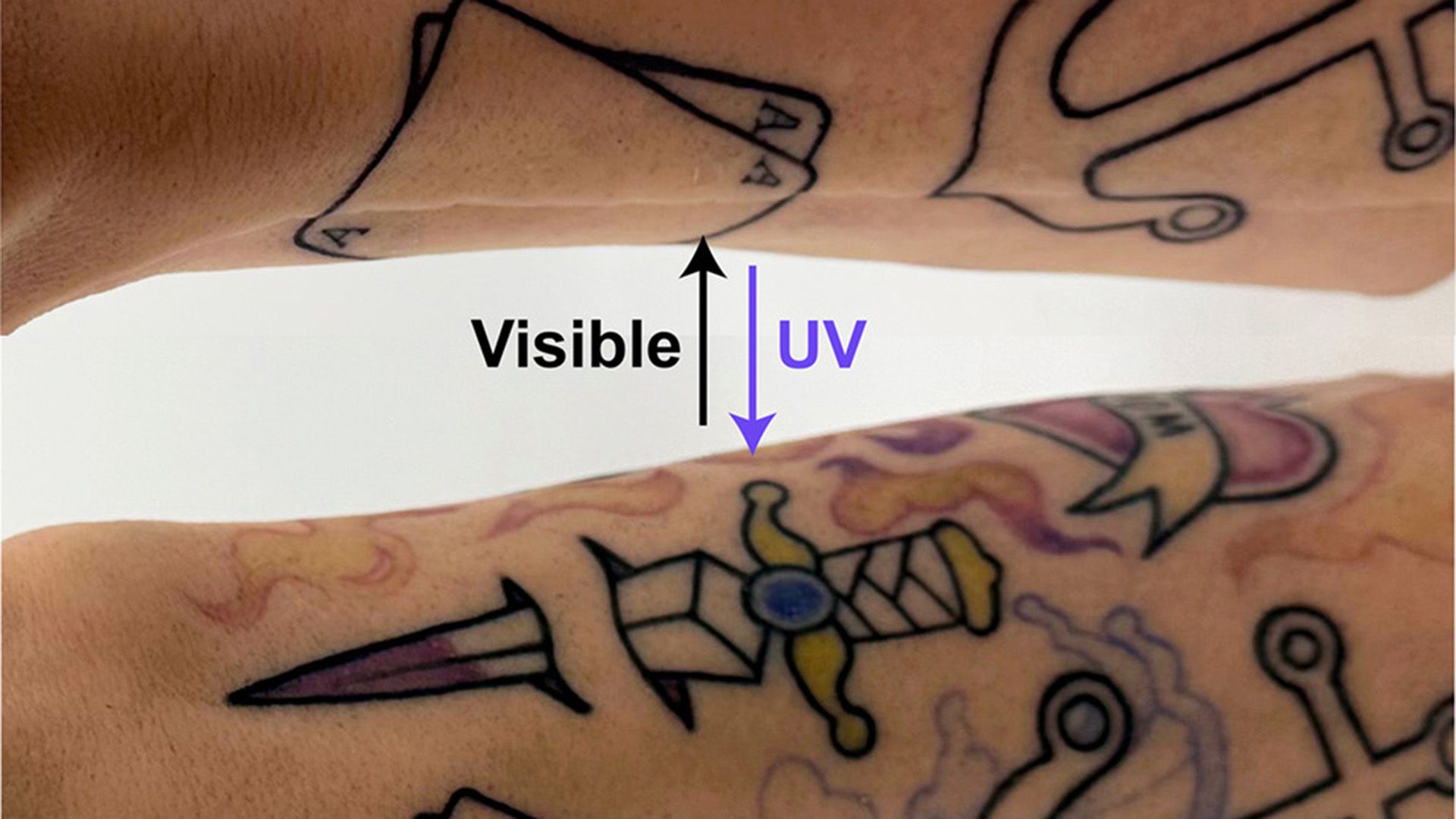
Researchers have developed a new type of tattoo ink that can be switched on and off with light, allowing colors and images in the skin to be changed or even "erased" without painful tattoo removal. The system, being commercialized as Photo Tat, could eventually let people conceal or change permanent body art. It may also support practical uses, such as medical tattoos visible only when a doctor needs to see them. The findings were published Friday (Oct. 9) in the journal Matter & Light.
Photo Tat contains three primary inks, blue, magenta and yellow, made with photochromic dyes that change color under different wavelengths of light. The dyes are encapsulated in nanoparticles of polymethyl methacrylate (PMMA), a medical-grade, glass-like plastic already used in medical implants and dermal fillers. A 365-nanometer ultraviolet (UV) LED can activate the pigments in about two to three seconds. The colors can persist for hours to days under indoor lighting, but bright outdoor sunlight erases them in seconds. Bruns and his team found that all three channels remained switchable in the skin for 1.4 to 2.2 years.
Because each color responds to a different wavelength, wearers can activate parts of a design selectively. Magenta might switch on under green light while yellow responds to blue light. This lets people customize their tattoos for the moment, which Bruns sees as appealing to people who already have many tattoos and want something playful. The technology can also be combined with conventional black ink, so hidden elements appear only when activated.
Bruns, an associate professor of biomedical engineering at the University of Colorado at Boulder, has tested the inks on his own skin. He said the tattoos could suit people who want body art but worry about permanence, or who need to conceal it for work, social or family reasons. "It's going to be on for most of the time, but just for this one moment, I'm going to turn it off for you grandma," he said. Bruns also believes the tattoos could help medical patients, such as those undergoing radiation therapy who receive permanent marker tattoos.
Source: Hacker News · Summarized by HeadlinesBriefing