
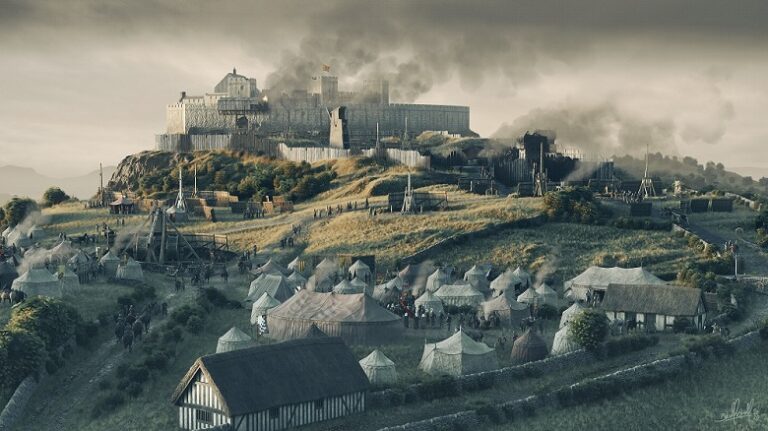
A medieval skeleton found beneath Stirling Castle, dubbed 'trebuchet guy' (Skeleton 150), is the only known trebuchet casualty in history. Paleopathologist Jo Buckberry analyzed the remains, revealing 61 skull fractures and a crushed right shoulder from a high-speed impact. The injuries, caused by a 300 km/h boulder, suggest a direct trebuchet hit during the 1304 siege. Buckberry's research, presented at the 25th European Meeting of the Paleopathology Association, rules out other causes like trampling or falls. The projectile’s energy (over 200 kilojoules) aligns with trebuchet calculations.
The skeleton’s trauma pattern—shattered ribs and a pinned position—indicates a heavy object slamming into him. Trebuchets were not designed for targeting individuals, making this a rare case of extreme luck. Buckberry notes, 'What is large and moving very quickly in 1304? Big rocks flung by trebuchets.' The findings highlight medieval warfare’s brutality, as described by Buckberry.
Skeleton 150 was buried with eight others in the castle’s chapel, dating to the Scottish Wars of Independence. While most deaths were violent, Skeleton 150’s injuries stand out. Sir John de Stricheley, an English knight, was also found there, adding complexity to the site’s history. The siege, led by King Edward I, involved massive trebuchets to breach the castle. Buckberry’s work fills a gap in archaeological evidence, as no prior trebuchet-related trauma cases exist.
The discovery underscores how siege engines, though aimed at structures, could cause catastrophic individual harm. Buckberry’s team used CT scans and forensics to reconstruct the impact. The 1304 siege’s scale and the trebuchet’s power make this case unique. While the lack of comparable cases limits conclusions, Skeleton 150 provides rare insight into medieval siege warfare’s human cost.
Source: Ars Technica · Summarized by HeadlinesBriefing