
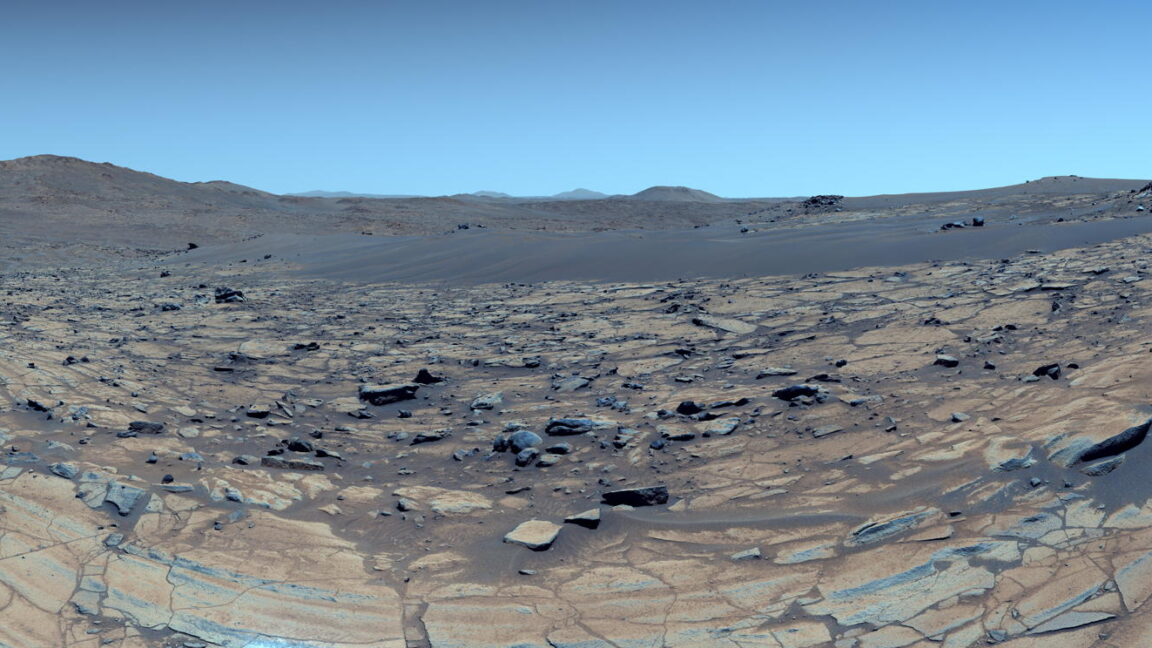
New research from NASA's Perseverance rover suggests ancient Mars was warm and wet rather than cold and icy, challenging long-held theories about the planet's Noachian epoch. The study, published recently, analyzed aluminum-rich clay pebbles in Jezero crater that show signs of persistent heavy rainfall and mild temperatures.
This finding contradicts the prevailing cold-and-icy scenario, which posited that Mars' early climate was dominated by frozen water occasionally melted by meteorite impacts or volcanic eruptions. The Noachian epoch (4.1-3.7 billion years ago) coincided with the Late Heavy Bombardment, when Mars experienced massive impacts like the Hellas and Argyre basins. Despite this violent period, evidence of water-carved landforms suggests the planet could have been habitable.
The aluminum-rich kaolinite clays found by Perseverance were depleted in iron and magnesium but enriched in titanium and aluminum, indicating they formed under persistent rainfall rather than hydrothermal conditions. This discovery provides crucial evidence for the warm-and-wet scenario, suggesting Mars may have had conditions suitable for life much earlier than previously thought.
Source: Ars Technica - All content · Summarized by HeadlinesBriefing