
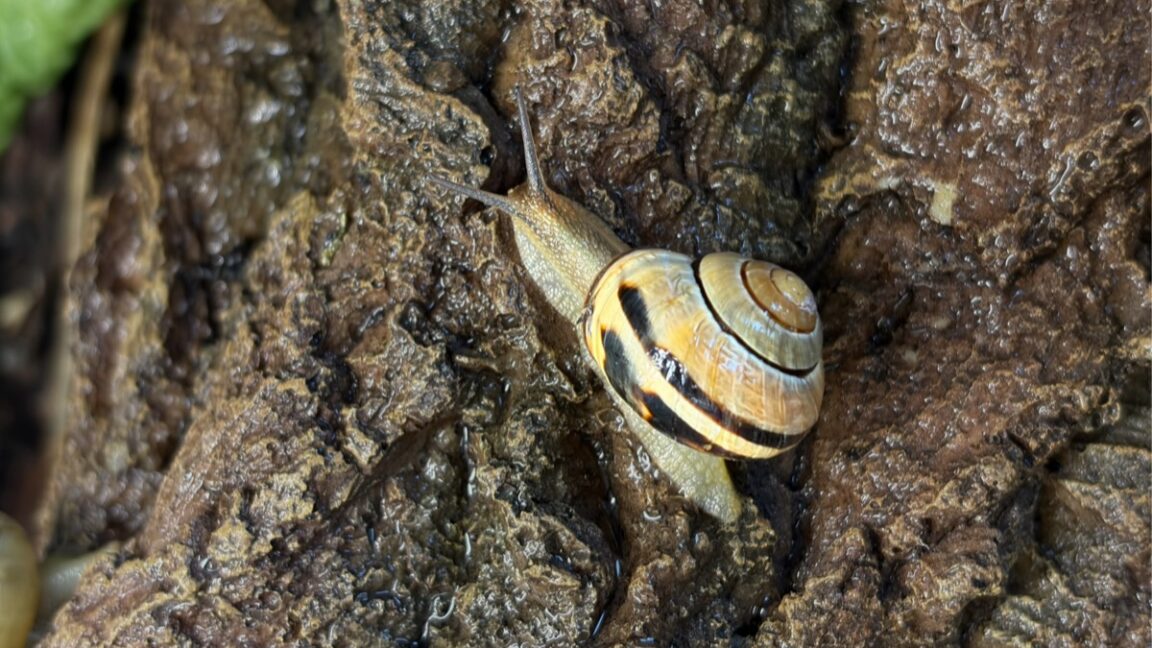
The garden snail C. nemoralis secretes five distinct types of mucus, each with unique mechanical properties. When disturbed, it produces two defensive kinds: a sticky yellow mucus highly resistant to tearing, and a bubbly substance that may smother or wash away small predators. Researchers analyzed all five using proteomics, X-ray fluorescence, and other techniques.
They found that all mucus types share a similar protein composition, with collagen IV as the main structural component. Differences arise from varying protein quantities and the addition of amorphous calcium carbonate (ACC), which tune cross-linking and network density. The two defensive mucus types contained the highest protein levels, directly affecting their mechanical strength.
The study, published in 2026, reveals that calcium is actively secreted alongside mucus, serving as an ion source for cross-linking or as a mineral precursor. Each mucus type exhibits a distinct hierarchical structure influenced by processing. This research deepens our understanding of how snails engineer their slime for survival.
Source: Ars Technica · Summarized by HeadlinesBriefing