
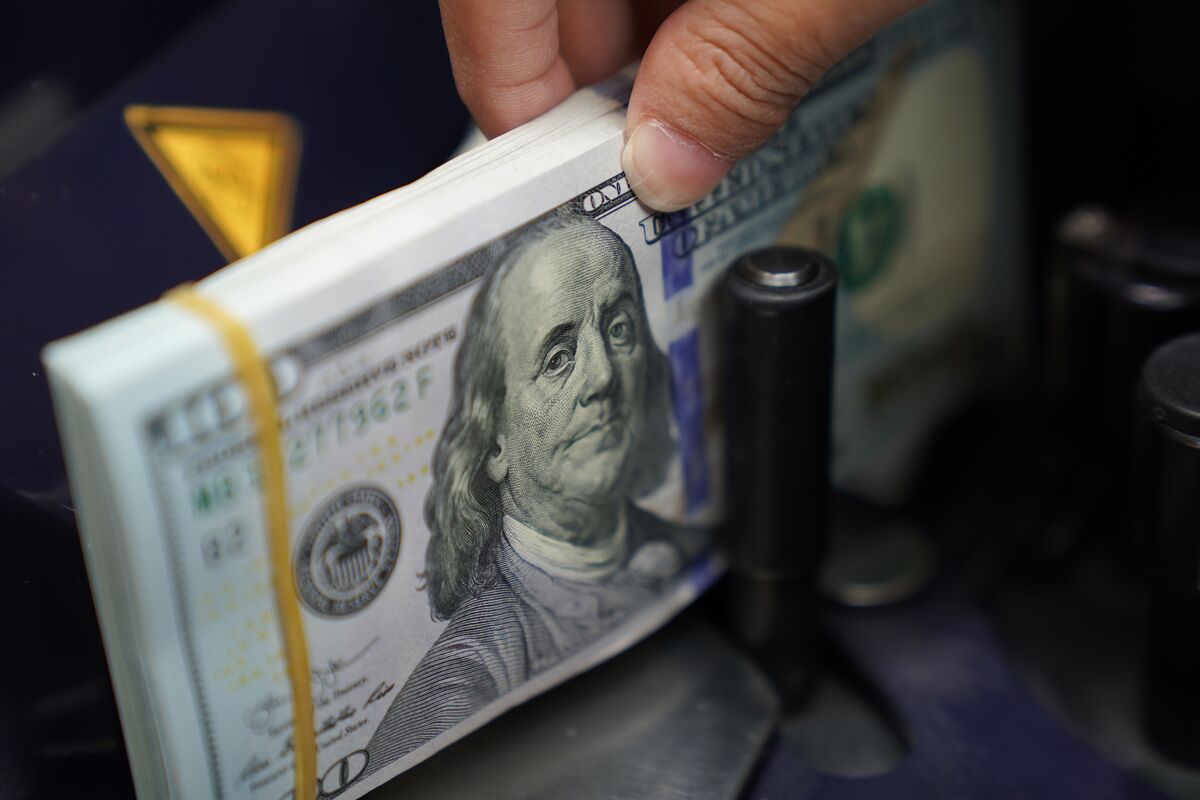
The dollar is wrapping up its best month since June after the Federal Reserve’s renewed focus on taming inflation pushed interest-rate expectations and US bond yields higher. The Bloomberg Dollar Spot Index has risen 1.9% in September, touching the highest level in two months. Solid US economic data and heightened inflation risks have been lifting the currency. The war in Iran has kept energy prices elevated and pushed Treasury yields to historical peaks, with the 30-year reaching the highest level since 2002.
The market is now pricing in nearly one percentage point of Fed rate increases in the next 12 months, further strengthening the greenback. “The dollar has continued to take its cue from US data,” said Jayati Bharadwaj, head of foreign-exchange strategy at TD Securities. “US data surprises are the directional signal for the dollar in the near term and whether the Fed can hike close to how much the markets are priced for.”
The rally that followed the Fed’s first rate hike in three years continues to be fueled by policymakers’ hawkish remarks. Fed Governor Michael Barr on Tuesday reiterated his warning that more rate increases will likely be needed to slow inflation. Similarly, New York Fed President John Williams said one more rate hike “may be appropriate late this year to support a timelier return of inflation to target.”
Widening interest-rate differentials and robust US economic growth are also forcing dollar bears to rethink their positions. Morgan Stanley recently abandoned its long-held view that the dollar will weaken in the second half of 2026. Traders are now closely watching the September jobs report set for this Friday, which will test aggressive monetary tightening bets. The US is also scheduled to release the personal consumption expenditures price index for August, the Fed’s preferred measure of inflation, on Wednesday. Inflation risks are elevated across the globe, but not all economies are positioned to withstand more aggressive rate increases. The expectation of the rates-path differentials is guiding the dollar outlook against its peers. All Group-of-10 currencies except the yen have weakened against the dollar in September. The rising risks of Japanese authorities stepping into the foreign-exchange market and expectations of more rate hikes from the Bank of Japan are supporting the yen. However, some indicators suggest the dollar’s run may be tiring. A measure of the greenback’s momentum climbed above 70 on Tuesday, indicating it might be overbought. On Sept. 24, Bloomberg’s relative strength index for the dollar had reached overvalued territory as well.
“We think the dollar is beginning to look stretched,” said Noah Buffam, strategist at CIBC Capital Markets. Kamakshya Trivedi, global head of foreign exchange and interest rates forecasts at Goldman Sachs Group Inc., expects the dollar to trade within its current range, predicting the Fed will only raise rates one more time in October.