
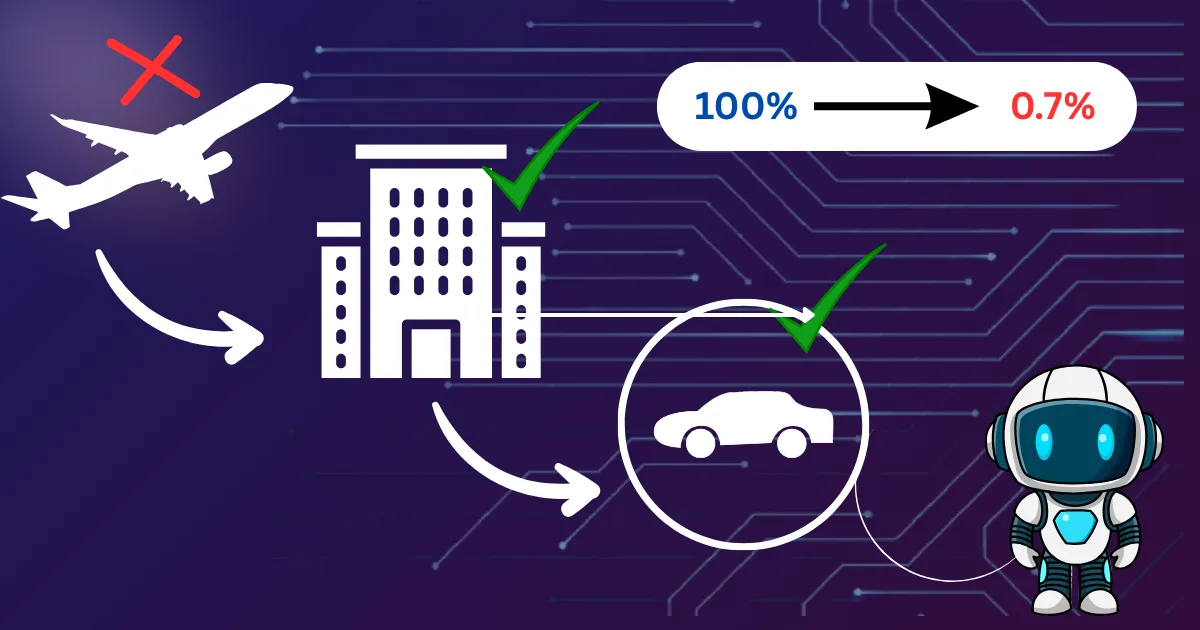
AI systems often fail to update conclusions when new data contradicts prior beliefs. I built Revision Trace, a Python benchmark to test six update strategies across 300 cases. While all methods scored 100% when recalculating from scratch, accuracy collapsed to as low as 0.7% when revising existing states. History-dependent strategies suffered massive failures: some left stale data untouched (up to 65% missed updates), while others broke unrelated facts (58% collateral damage). Three strategies produced silent failures—correct final answers but corrupted internal states. One method remained consistently wrong 25% of the time regardless of update order. The fix? Track dependencies and propagate changes downstream. This lightweight approach achieved 100% accuracy with 75% less computation than full rebuilds. The code is open-source on GitHub.
The core issue isn’t memory—it’s state management. Agents can hold all the right facts yet still fail to revise dependent logic when a variable changes. Revision Trace isolates this exact failure mode by comparing two routes: one starting fresh, the other adapting incrementally. Only the dependency-tracking solution passed both. Real-world AI must do more than remember—it must reason through change.
Source: Towards Data Science · Summarized by HeadlinesBriefing