
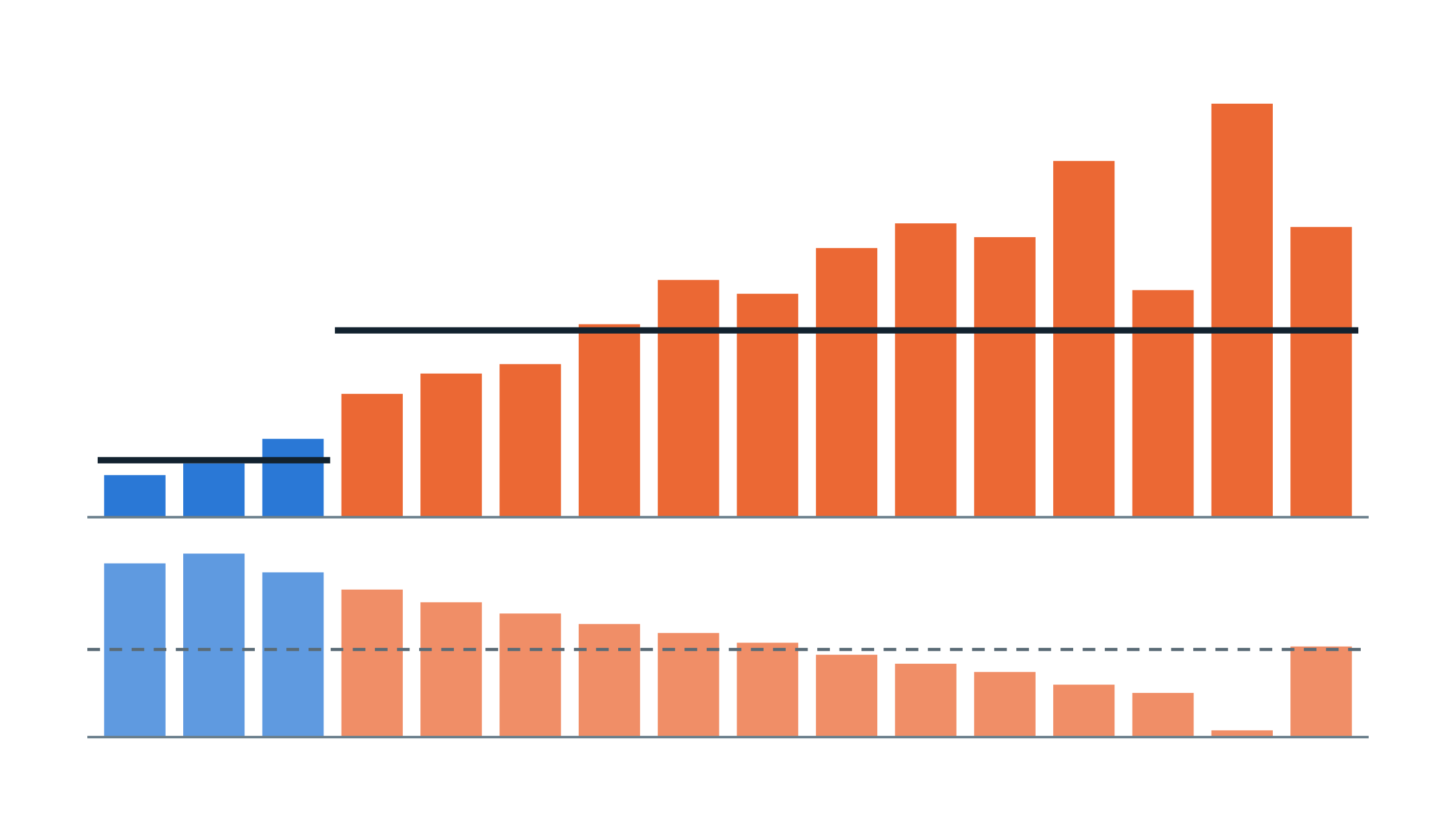
For a year, we believed supervised binning carried our winning entry to an insurance hackathon. After four seeds per arm and one shared feature set, the credit belongs elsewhere. In 2025, we took first place in an insurance hackathon. A year later, we audited that result, and the audit reversed the belief underneath it. Binning did beat not binning. However, our own library's bins were indistinguishable from a rival's. The only gain that was not a close call was speed: 126 minutes of carving went down to 4.3, on the same features. Tschuprow's T with the target, on held-out data: 0.0240 across the sixteen raw levels, 0.0358 across the two buckets, a 1.49× rise.
We carved 400 features this way, and we believed it was half of why we won. This approach took us to first place in the Crédit Agricole Assurances Data Science Academy hackathon, out of more than 500 participants. The hackathon was ranked on the private leaderboard of the public ENS Challenge Data #161, as it stood when the hackathon closed in spring 2025. The challenge also served as the running example in the Data Science course we taught at CY Tech.
Every year-on-year accuracy gain turned out smaller than the noise in our own tuning, and the edge we had credited to carving came from which features the selector kept. To show this, we ran four seeds per arm, measured every margin against its own spread, and held one feature set constant to separate two steps we had always run together. Speed was easy to measure. Accuracy took three experiments.
The policies are anonymised French farms, priced against fire. Floor area comes in sixteen bands, and claim frequency climbs roughly tenfold across them. Supervised binning cuts these bands in two, at 1000 m². Finer options existed, since ten of the bands clear the 2% min_freq floor. However, the carver's association measure ranked this cut above all of them. Without supervised binning, a pipeline would keep all sixteen bands, or merge them by hand.
Source: Towards Data Science · Summarized by HeadlinesBriefing