
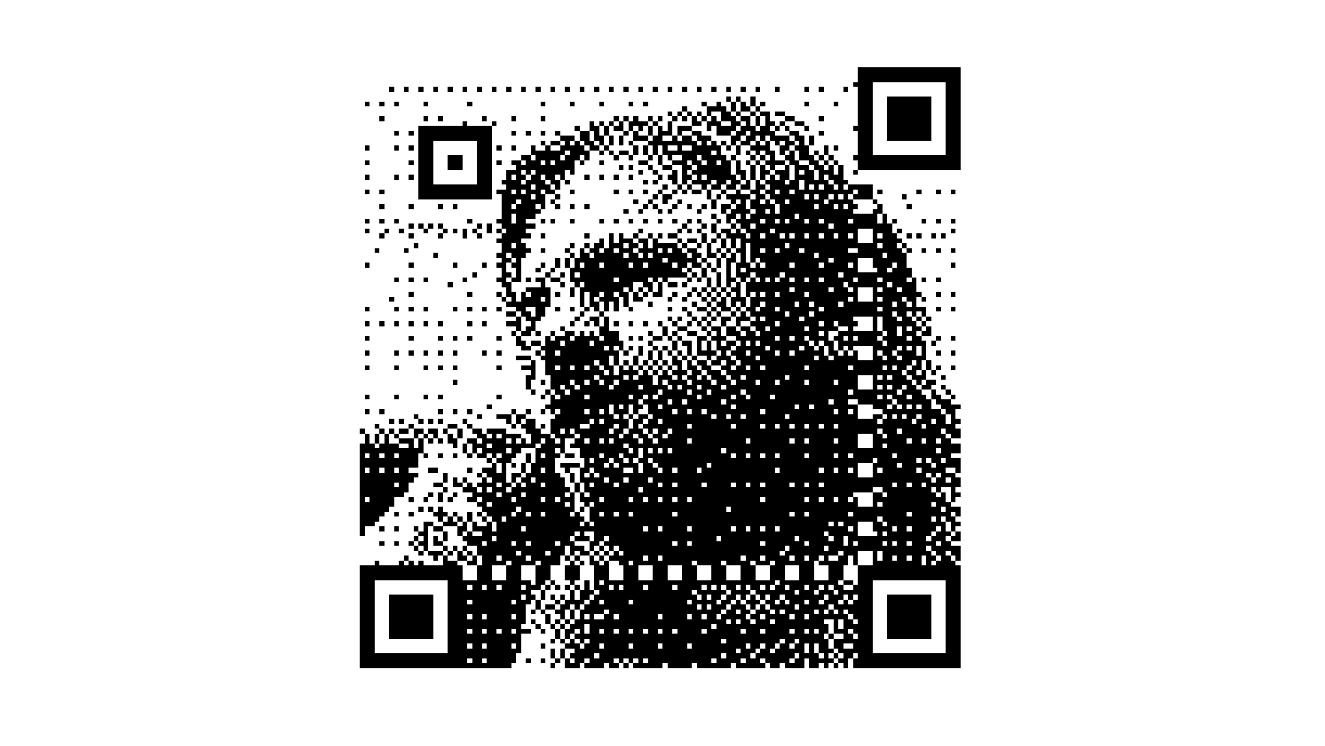
A QR code is a grid of squares divided into function patterns and data modules. While function modules must remain clear for scanners to locate the code, the data modules can be modified. Brands often shrink these modules to make room for images, allowing for distinctive, artistic designs.
To integrate images, one can divide each pixel into a 3x3 grid, using the center for data and the surrounding cells for a photo. To avoid harsh thresholds, techniques like a Bayer filter or Floyd-Steinberg dithering can be used. The latter involves diffusing the error of thresholded pixels to neighboring pixels, ensuring the average brightness remains accurate.
To make images look cleaner, a double pass of error diffusion can be applied. The first pass specifically masks the data modules by diffusing their error to surrounding pixels. This reduces the 'alt-and-pepper' noise caused by the data modules. Ultimately, creating these codes is a trade-off between aesthetics and scannability; too much modification may make a code unreadable on low-quality devices.
Source: Hacker News · Summarized by HeadlinesBriefing