
Egypt's Theban necropolis holds over 400 tombs. New research in Frontiers in Environmental Archaeology examines Theban Tomb 209 in the western necropolis, dating to the early 25th Dynasty (754–656 BCE) and abandoned in the Ptolemaic period (305–30 BCE). Original owner likely Nisemro, a high official of Nubian origin. Tomb prone to flash flooding from Wadi Hatasun drainage channel, making it complex archaeologically.
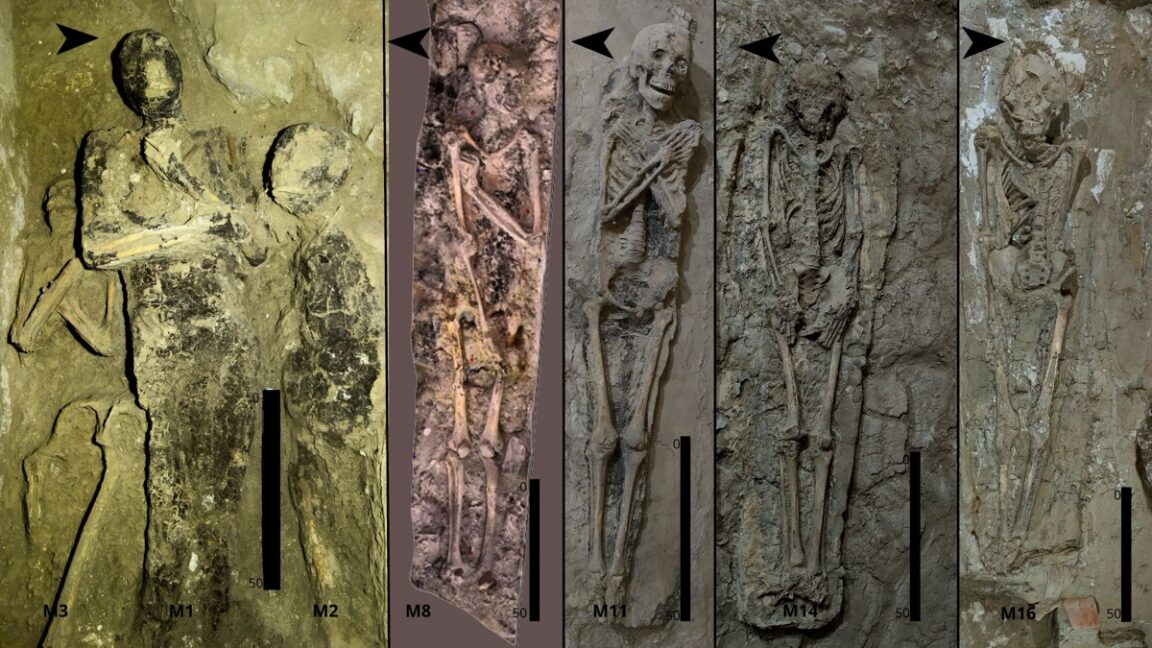
Researchers used integrated archaeothanatological approach on Side Chamber 3, discovering 16 mummified people (1,444 bones), one mummified dog, and disarticulated remains of at least four others (1,775 bone fragments). Co-author Jared Carballo-Perez notes "spatial logic" in reuse—each new deposition adapted to previous bodies, a "funerary memory." Earliest burials were individual with coffins; later stages show increased density, vertical superposition, and decline in coffin use.
Co-author Miguel Ángel Molinero Polo says earliest individuals had high social standing with coffins, funerary nets, amulets, and costly items like Phoenician amphorae contents. Later vertically superposed bodies lacked coffins but were carefully mummified. Evidence of fire damage (up to 550° Celsius) in one chamber. Authors conclude the tomb represents a "dynamic mortuary environment" where reuse progressively transformed organization, materiality, and meaning over centuries.
Source: Ars Technica · Summarized by HeadlinesBriefing