
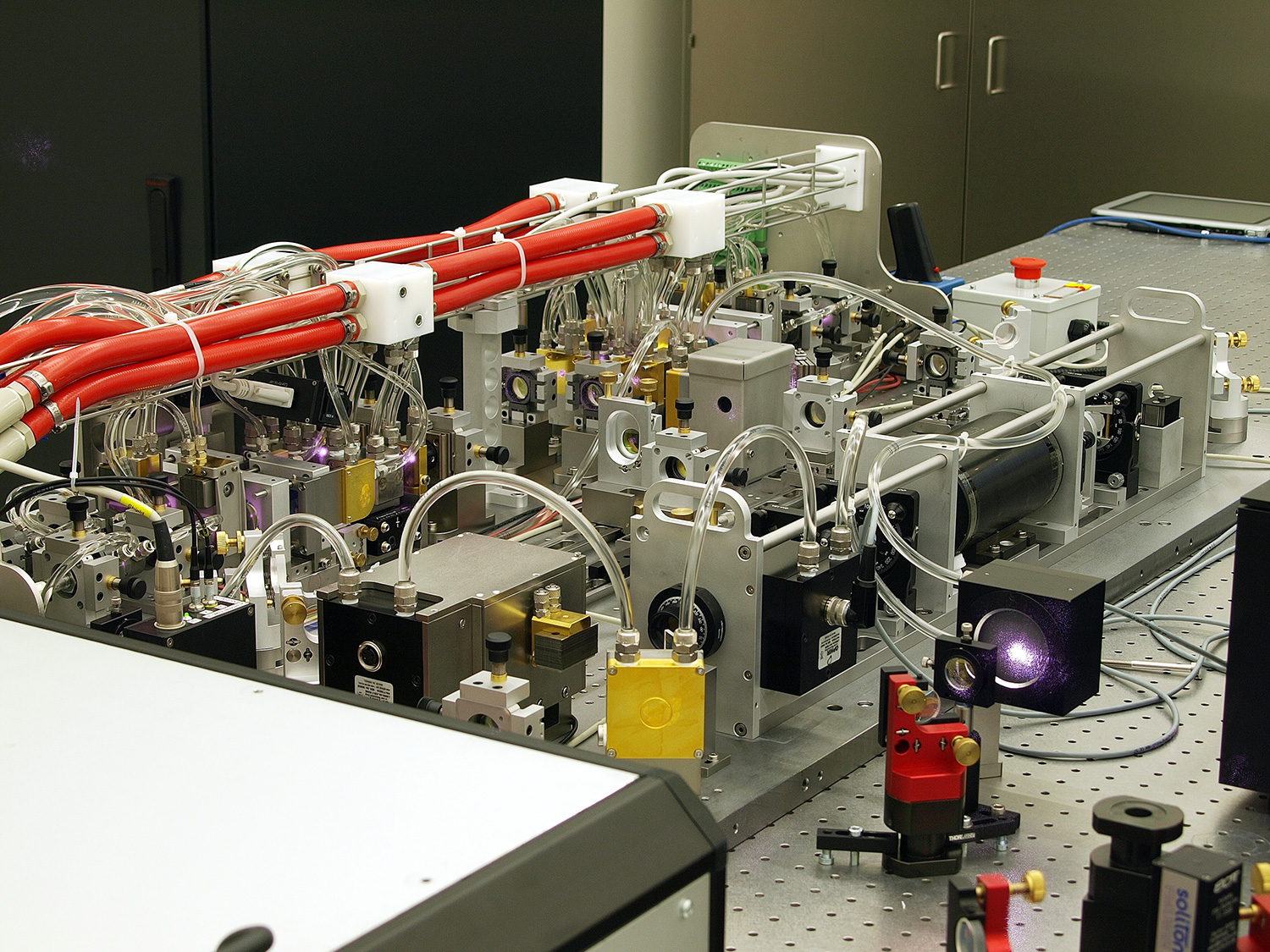
A new experiment demonstrates superposition of temporal order in quantum mechanics, showing results 18 standard deviations away from what Bell's theorem would predict. This suggests that quantum systems can exist in states where the order of events is indefinite, challenging our classical understanding of cause and effect. The findings push quantum mechanics into territory where time itself becomes uncertain.
However, the experiment still faces technical loopholes similar to those that once plagued quantum entanglement research. About 1 percent of photons survive the measurement process, and it's technically possible that photon losses could skew results in ways compatible with hidden variable theories. The hardware also hasn't been separated by sufficient distances to rule out sub-light-speed influences.
The work builds on decades of quantum research and points toward experiments that could close these remaining gaps. Unlike many quantum discoveries that remain purely theoretical, this research has immediate practical applications. The quantum device used in the study has already shown it can outperform traditional systems in tasks ranging from channel discrimination to quantum key distribution and noise mitigation.
Source: Ars Technica · Summarized by HeadlinesBriefing