
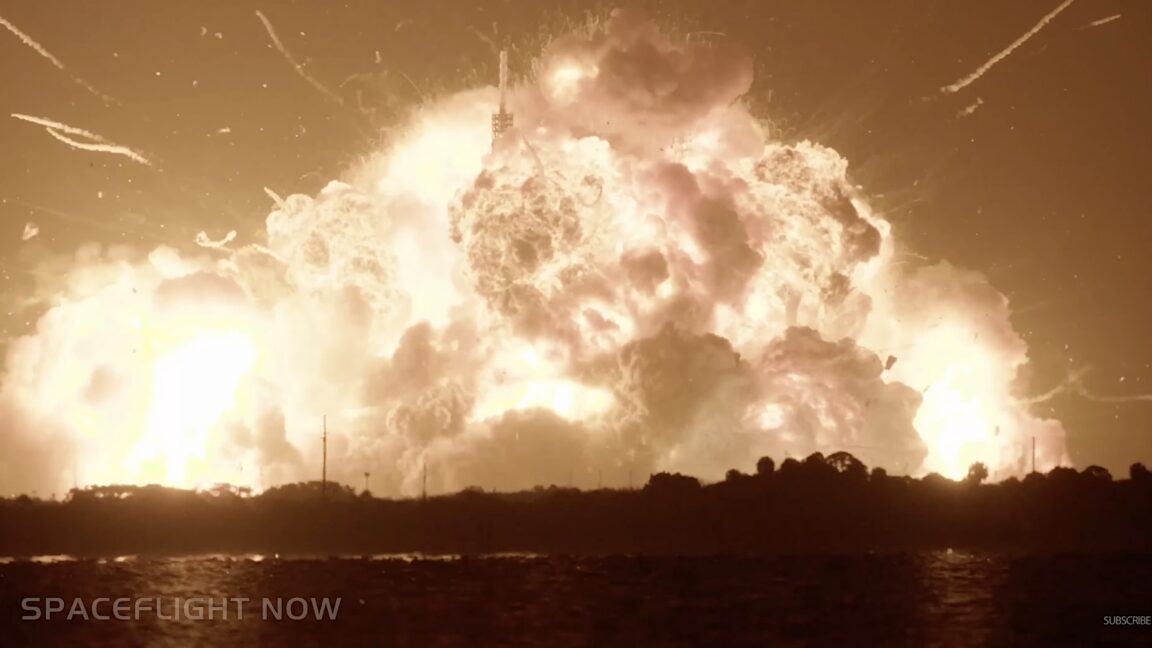
Blue Origin's New Glenn rocket erupted in a fireball during a test-firing at Cape Canaveral's Launch Complex 36, destroying the launch vehicle and pad infrastructure. The blast shattered windows at a hangar nearly a mile away, marking a significant setback for the company's orbital launch ambitions. Despite the damage, no personnel were injured as safety protocols successfully evacuated the area.
The explosion occurred amid plans to dramatically expand launch operations at the Florida spaceport. Officials project 500 launches per year by 2036, up from roughly 100 annually today. Multiple companies including SpaceX, United Launch Alliance, Stoke Space, and Relativity Space are establishing facilities along a narrow coastline stretch, creating safety coordination challenges for methalox-fueled rockets.
Space Force safety protocols treated the New Glenn test with "100 percent TNT blast equivalency," establishing a Blast Danger Area spanning 7,174 feet in diameter. Engineers collected "phenomenal data" on overpressure impacts, which will refine explosion models and potentially reduce future keep-out zones. The explosion was the largest at Cape Canaveral since the Soviet N1 failures over 50 years ago.
When SpaceX brings Starship to Florida, initial safety zones will extend roughly 12,000 feet from launch pads. The Commercial Space Federation argues these restrictions are excessive, advocating for a maximum 25 percent TNT equivalency standard instead. Real-world explosion data like this incident will prove essential for balancing rapid launch expansion with worker and public safety.