
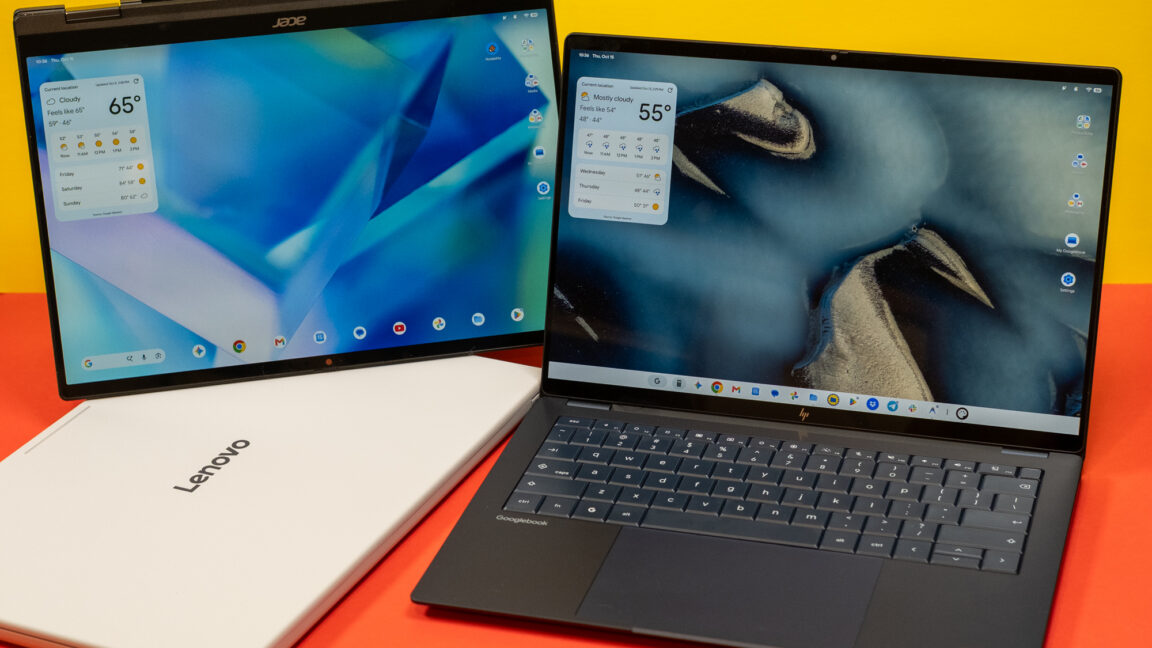
Android laptops are here, but Google has a lot of work ahead to make them good. Googlebooks, the latest attempt to bring Android to larger screens, follow tablets, Chromebooks and foldables, which induced little change in how people use Android software. These Android-powered laptops aim to pick up where the web-focused Chrome OS left off, offering premium hardware and native support for Android apps. Google sees them as an alternative to Windows and macOS, but those platforms are entrenched with decades of software and interface conventions that keep users locked in.
For devoted Android phone users, some features in Googlebook OS are appealing, but the Android roots of these machines are impossible to miss. At times it feels like using a Chromebook, and at others like using a giant phone. It rarely feels like using a premium laptop, and that is the problem. Unlike past Chromebooks, which succeeded mainly in the budget segment, Googlebooks largely ignore lower-cost options, and most of the lineup costs well over a thousand dollars.
Hardware is a strong point. All of the launch models have excellent touchscreen displays, aluminum or magnesium bodies, biometric unlock and large trackpads. The Glowbar lights up in Google colors when Gemini is activated, but it does little else. There is a Googlebook for most premium laptop buyers, from Acer's convertible to Asus and HP's sleek models and Lenovo's 15.3-inch machine with an HDMI port and USB-A.
The least expensive option, the Acer Googlebook 14, starts at $899, a limited-time price. It offers a vibrant OLED screen, a metal chassis and three USB-C ports, though it lacks a haptic trackpad and its speakers sound weak. The Dell XPS Googlebook at $999 uses an LCD instead of OLED. The HP Googlebook 14, powered by a Snapdragon X Elite chip, has a nicer keyboard but costs $1,300.
Source: Ars Technica · Summarized by HeadlinesBriefing