
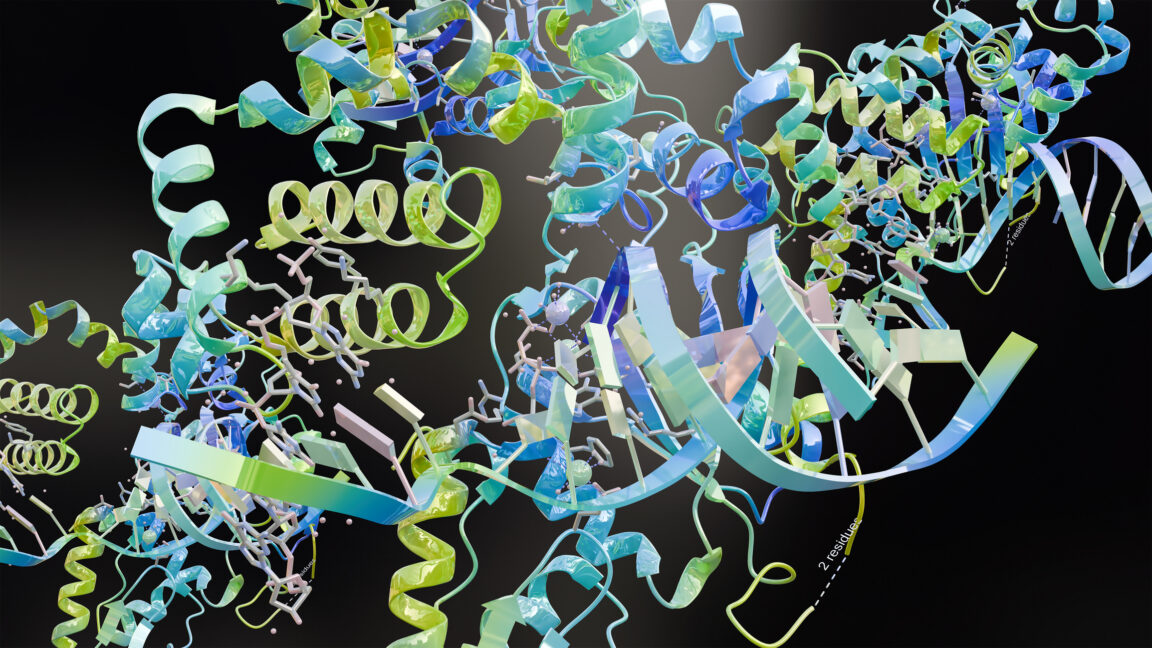
AI-based tools seem to be causing security threats on a nearly daily basis, in part because we’ve been slow to recognize potential threats. One area where we seem to be ahead of the game, however, is in biosecurity. We’ve developed increasingly sophisticated tools for designing proteins and seen some major successes, such as AI-designed enzymes that can digest plastics or block venom proteins. But these same tools could be used to make toxins or alter the behavior of viral proteins.
Nearly a year after that risk was flagged, it still wasn’t clear what anyone could do about it. On Wednesday, the Deep Mind team at Google published a research paper offering a potential solution: protein watermarking. The system creates a watermark on protein sequences themselves without compromising the protein’s function. This allows new proteins designed by trusted researchers to be identified, opening everything else up to closer scrutiny.
The work was based on Google’s Synth ID tech, which can add a subtle watermark to AI-generated digital material. The watermark influences the probability of certain choices the AI makes, and that bias ends up systematically distributed throughout the product. Because you can’t identify the watermark without knowing how it was encoded, it’s impossible to remove. The Google team started with one of the most popular AI protein design tools, Protein MPNN.
Source: Ars Technica · Summarized by HeadlinesBriefing