
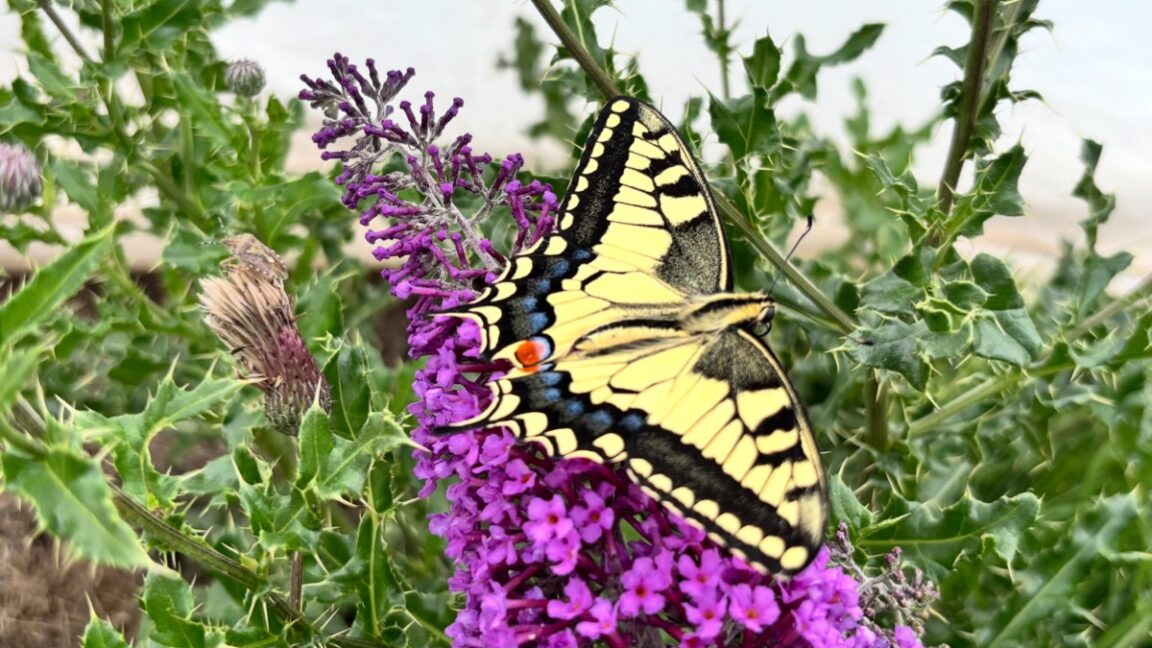
Old-fashioned striped barbershop poles turn on a vertical axis, but humans typically perceive the stripes moving upward rather than turning with the pole. It’s a well-known visual illusion. According to a new paper published in the journal Nature, a similar effect could explain how butterflies often evade predatory birds: Their flight patterns and wing patterns combine to make it hard for predators to accurately gauge speed and direction.
“The stripes and spots on many butterflies’ wings interfere with the way visual systems try to guess the direction and speed of moving things, boosting false motion cues while hiding the butterfly’s true heading,” said co-author George Hancock of the University of Exeter in Cornwall. “The illusions interfere with the predator’s most basic visual targeting system and disrupt the final ‘ballistic attack’ in the tens of milliseconds when it commits to grabbing its prey, with no time to change course.”
Hancock et al. wanted to explore a paradox: butterfly wings sport visually striking patterns that make them stand out, yet there are very few predators capable of catching them mid-flight. The team suspected the wing patterns could serve as an anti-predator defense via a form of camouflage called “motion dazzle.” This is similar to the striped pattern of the zebra, which induces the barbershop pole illusion and the wagon-wheel effect, confusing predators.
Source: Ars Technica · Summarized by HeadlinesBriefing