
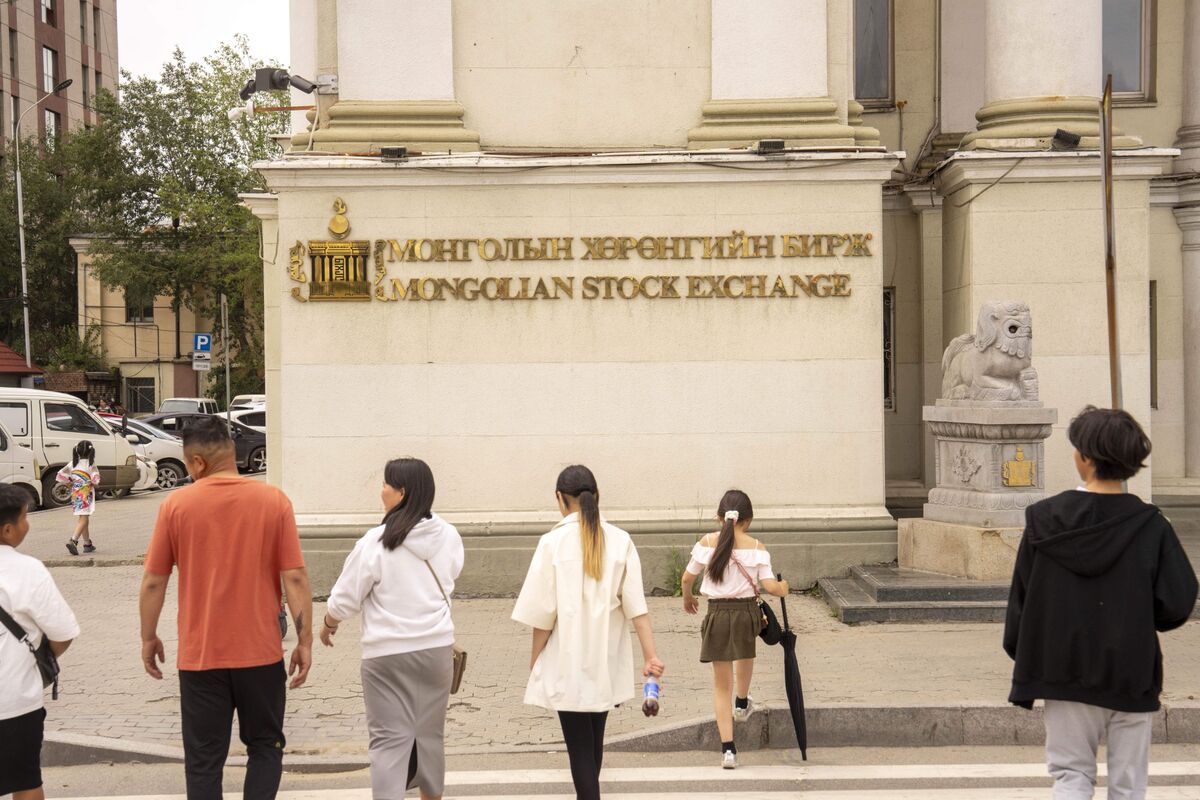
Mongolia is on course to be the world’s best stock market this quarter, as the landlocked North Asian country rides a commodity boom that insulates it from the volatile AI trade. The benchmark MSE Top 20 Index has climbed about 26% since the end of June, outperforming major global gauges including the S&P 500 and regional peers such as South Korea’s Kospi by a wide margin. Coal miner Tavantolgoi JSC, which accounts for nearly half of the index, has surged 87%.
The sparsely populated nation’s minuscule $4.6 billion equities market has emerged as an unlikely winner as the rest of the world reeled from a July selloff in chip shares. Fueling the rally has been Mongolia’s soaring exports of copper and coal, as well as supportive policy moves on taxation and foreign investment. Overseas shipments of minerals including coal climbed 61% in the first eight months of the year, largely driven by China, which constituted 93% of Mongolian exports. The strong momentum may last as the southern neighbor’s coking coal shortage is expected to persist into next year amid supply woes triggered by a local mine accident.
Meanwhile, Deutsche Bank AG expects copper prices to surge more than 50% within the next six months due to shrinking stockpiles. Despite its small size of $25 billion, Mongolia’s economy expanded 6.8% last year. The World Bank expects the pace to moderate to 5% this year but remains “robust.” Aiding the equities bull run has been a surge in liquidity, attributed to expanded money supply by the local central bank. Given the Mongolian market’s limited size, “it doesn’t take much marginal liquidity to push prices higher,” said Simon Kitchen, managing director at Emerging & Frontier Capital in London. Besides extending tax reliefs on income and capital gains on stock investment, “they have also removed restrictions on foreign ownership of banks, and made it easier for foreign investors to set up to trade,” he added. Among the biggest threats to a durable stock rally is Mongolia’s worsening inflation, which stood at 12.5% in August. The economy also faces challenges such as likely winter power shortages, especially given its heavy reliance on Russian supply that has dropped since the war in Ukraine, according to Thomas Hugger, chief executive officer of Asia Frontier Capital Ltd. in Hong Kong. Even so, Hugger believes Mongolia’s stock rally has room to run for now. “There is still upside as many companies are still undervalued,” he said, citing single-digit price-to-earnings ratios across Mongolian banks and insurers.