
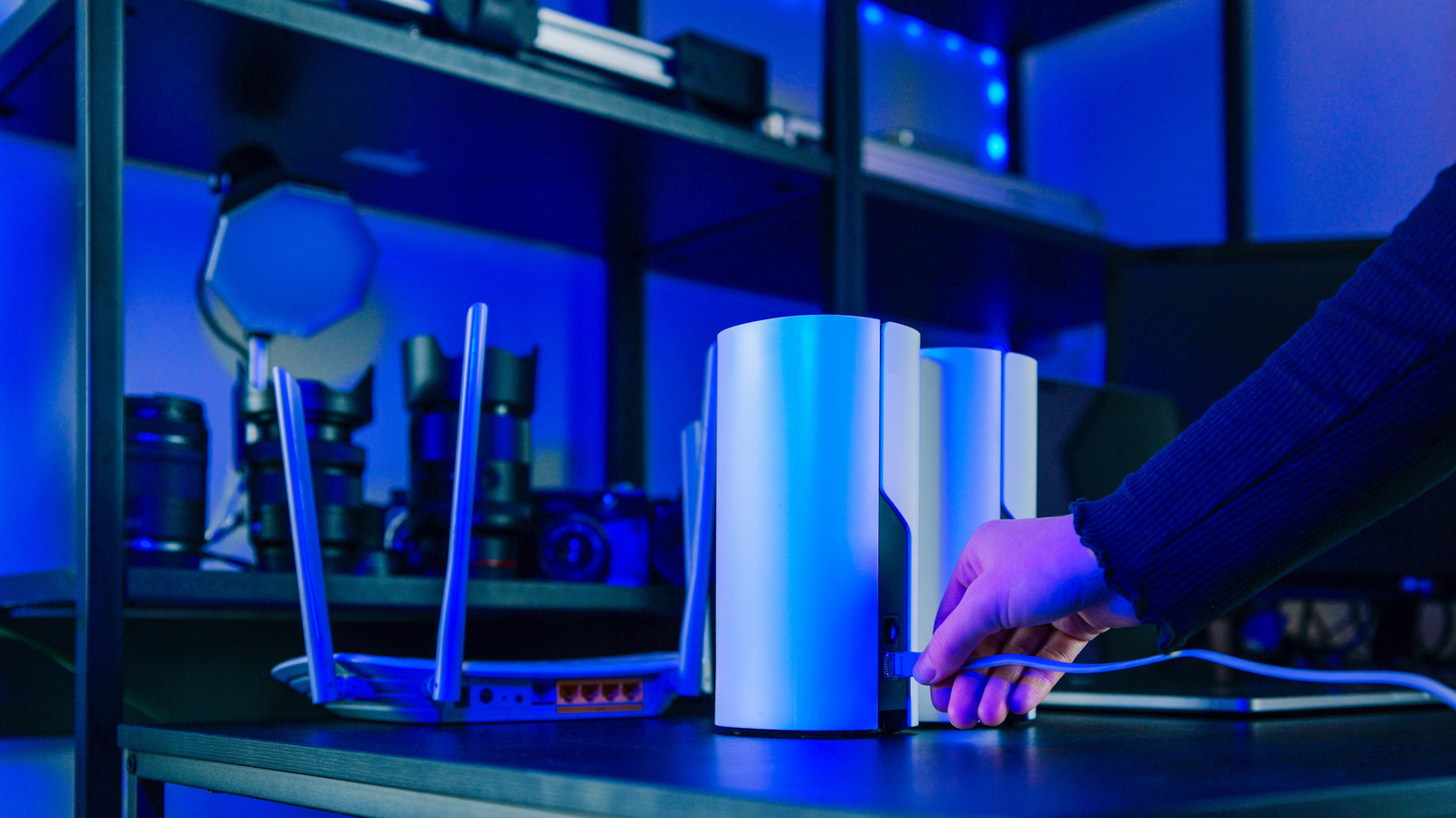
Mesh systems tend to look like minimalist decor. In just about any space larger than an apartment, it's hard to deny the value of mesh Wi-Fi routers. They do have drawbacks — primarily their price-to-performance ratio — yet top speed is meaningless if coverage isn't consistent.
Something we hadn't really thought about much until recently is the fact that most mesh routers are missing external antennas. They do have antennas, naturally — they're just under the surface. As it turns out, burying antennas is not only fine, but actually a technical advantage given the goals of mesh systems. There are also additional business factors, although this is one case in which companies aren't cutting corners.
Although external antennas do maximize range, that's actually less of a priority with mesh systems. A mesh network is already designed to repeat signals and fill in gaps. Internal antennas are often omnidirectional, aiding in seamless connection and handover. There's higher potential for things to go wrong with external antennas: misaligning them can reduce connection strength, and they can be broken.
Manufacturing costs offer an incentive to move things inside. External antennas require more parts and materials, and the bill adds up over thousands of units. Internal antennas also permit minimalist designs that shoppers find appealing, which is important when you have two or three units scattered through your home.
Source: Engadget · Summarized by HeadlinesBriefing