
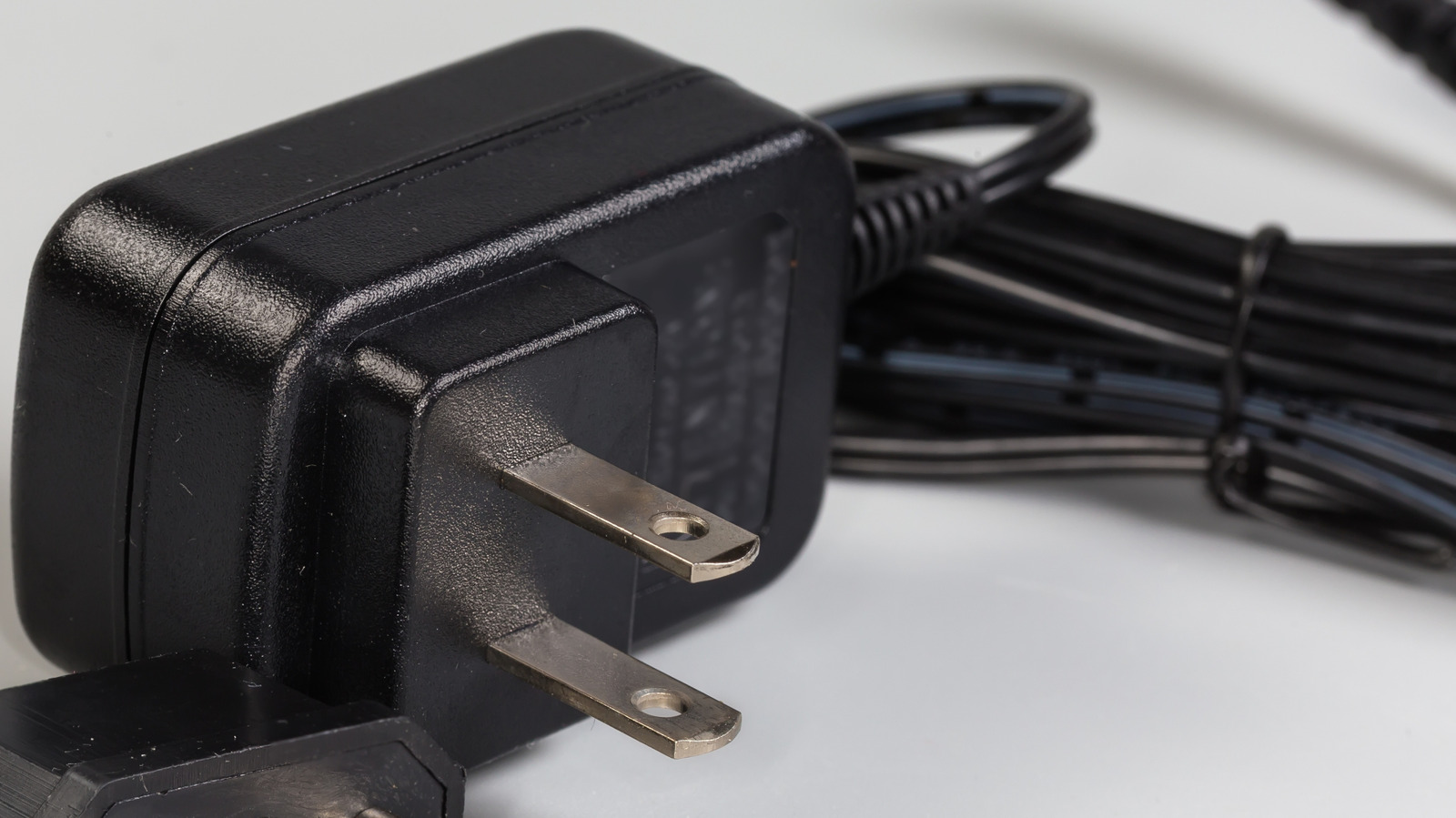
If you've ever looked at the end of a plug, you've probably wondered why some have holes and some don't. The answer isn't a conspiracy theory. The holes play a bigger role in manufacturing than in your home's wall outlets.
Today, the holes mainly help manufacturers position the metal blades during production. A worker passes an alignment rod through the holes to hold the blades in place before plastic is molded around the assembly. The holes also act as lockout tags, a necessary safety mechanism. They aren't openings for electrical current, and they don't serve a specific job once the plug is in an outlet.
The common explanation that holes help an outlet grip the plug is no longer accurate. According to the National Electrical Manufacturers Association (NEMA), the holes originally worked with a small raised feature inside the receptacle, called a "detent," that clicked into the hole to retain the plug. Later, Underwriters Laboratories (UL) revised receptacle standards to hold plugs in place without the holes. Most manufacturers stopped adding the matching raised features, but the holes in plug blades remained, now as an optional design feature.
You can use a plug without holes. A hole-free blade will still make electrical contact and close the circuit in an appropriate outlet, and it isn't defective or missing required safety features. Manufacturers that include holes must follow specified sizes and shapes to maintain compatibility with old and new receptacles. If a plug slides out with little resistance, the cause is more likely wear and tear in the receptacle than the plug prongs.
Source: Engadget · Summarized by HeadlinesBriefing