
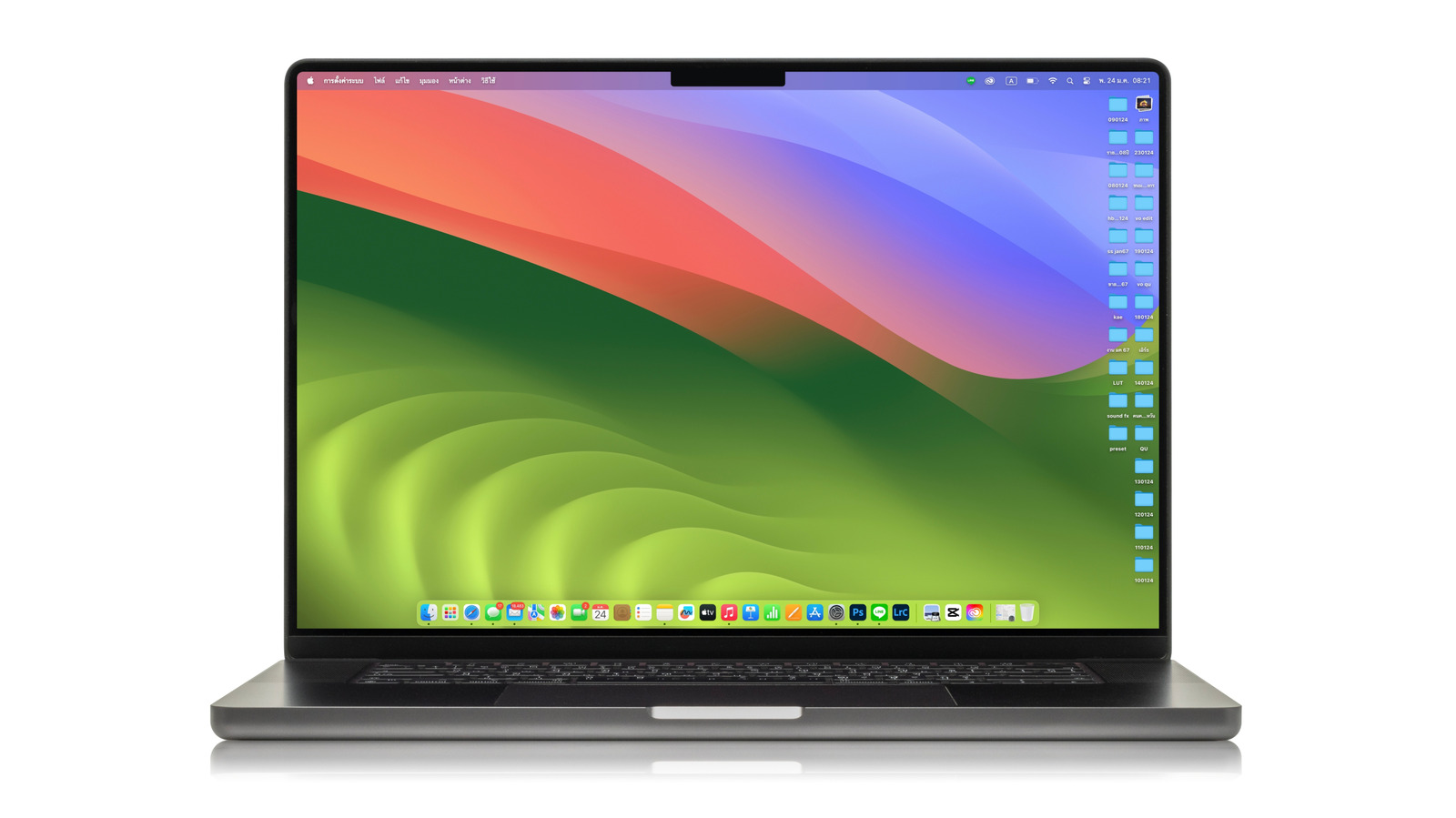
Five years is a long time in the MacBook world. Each generation of Apple's laptops typically brings faster processors and more memory, yet the starting price of MacBooks has usually stayed fairly stable from one year to the next. These are not normal times, however. Electronics costs keep climbing as AI data centers consume supply chains for key PC parts like memory, storage and GPUs. Apple could no longer absorb the components shortage and announced major price hikes earlier this year across its MacBook Pro line.
In 2021, Apple was just getting started with its custom silicon after moving away from AMD GPUs and Intel processors. That year it debuted a chunkier MacBook Pro lineup with the M1 Pro and M1 Max chips. The entry-level 14-inch model cost $1,999, and the 16-inch cost $2,499. Adjusted for US inflation, the 14-inch would cost about $2,467 in 2026, and the 16-inch about $3,084.
Today's models carry the latest M5, M5 Pro and M5 Max chips, a major leap in graphics and processing performance. Before the price hike, the 2026 14-inch MacBook Pro with the base M5 chip was $1,699, now $1,999 after an extra $300. The 16-inch model with the M5 Pro rose from $2,699 to $2,999, a jump of $300 that leaves it roughly $500 above its pre-hike price tier.
Without the memory shortage, today's prices would have compared favorably with 2021's lineup. Instead, AI-driven cost increases have upended what would have been modest differences. Consumers may need to live with these effects for at least the next few years, suggesting further high prices for future MacBook Pro generations.
Source: Engadget · Summarized by HeadlinesBriefing