
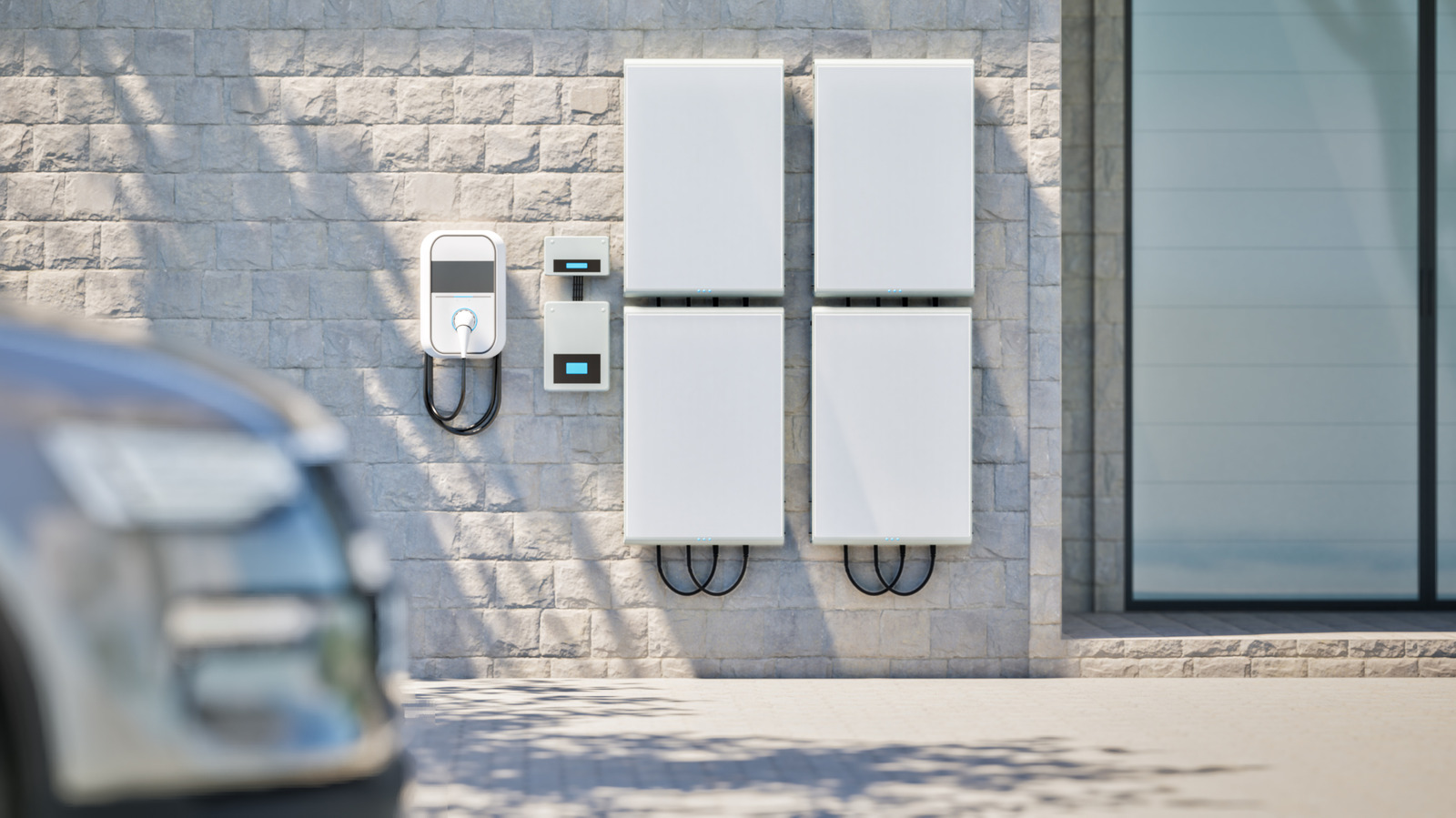
EV batteries have enough capacity to power homes, but several hurdles block adoption. Battery capacity (kWh) and power output (kW) determine runtime and simultaneous appliance use, plus V2H must handle startup surge. However, most EVs lack bidirectional charging and compatible V2H hardware; a standard charger won’t work in reverse.
Installing a home backup system requires a bidirectional charger, inverter, gateway, and often electrical panel upgrades, which can cost thousands of dollars. The vehicle must be present, charged, and connected, and every kilowatt used for the house reduces driving range. Heavy loads like AC or electric heating further drain the battery, and frequent use accelerates wear.
Compatibility varies by manufacturer. GM EVs pair with the GM Energy Power Shift Charger and V2H Enablement Kit, Kia uses Wallbox’s Quasar 2 charger and Power Recovery Unit, Tesla offers Power Share for Cybertruck and Model 3/Y with Powerwall 3, and Polestar provides market‑specific bidirectional services. All require matching equipment and professional installation, and costs can run into thousands of dollars. The feasibility also depends on local availability and regional service support.
Source: Engadget · Summarized by HeadlinesBriefing